
New Perfection: Systemic Abstraction
Curatorial Essay
26 Apr 2026In New Perfection and Systemic Abstraction, the pictorial field is reconceptualized as an internally regulated system in which complexity is structured into coherent relations rather than reduced. The framework advances a model of abstraction in which painting operates as a self-organizing structure governed by precision, balance, and systemic interdependence, not gestural immediacy or reductive minimalism. Abstraction is oriented toward structured complexity as a condition of formal resolution.1
Central is the distinction between New Perfection as formal orientation and Systemic Abstraction as its theoretical structure. The artwork is defined as a network of interdependent elements whose meaning arises through relational dynamics rather than isolated properties. Drawing on systems theory, the painting is conceived as operationally autonomous, generating coherence through internal organization.2
The theoretical lineage of modernist abstraction and post-minimal discourse forms the historical substrate of this framework, as articulated in the Founding Document (FD, 2026), which provides its primary reference for system definitions and logic.
Systemic abstraction reconfigures discontinuity as structured modularity: discrete units function as coordinated components rather than fragments. This shifts abstraction toward integrative synthesis, where multiplicity is stabilized through relational order.3
New Perfection defines abstraction as structured systems in which elements achieve relational necessity and completeness. “Perfection” denotes systemic coherence: no element can be altered without affecting the whole.4
Visually, the system operates through interlocking structures, modular segmentation, and multi-scalar organization. Repetition and differentiation generate equilibrium between local complexity and global coherence.
Chromatic systems function structurally, maintaining continuity and reinforcing relational order rather than expression.
Viewer engagement unfolds through navigation across interconnected zones, where meaning emerges through iterative reconstruction of relations.
The framework reorients abstraction toward structured complexity, situating painting within relational ontology and emergent order.
Works
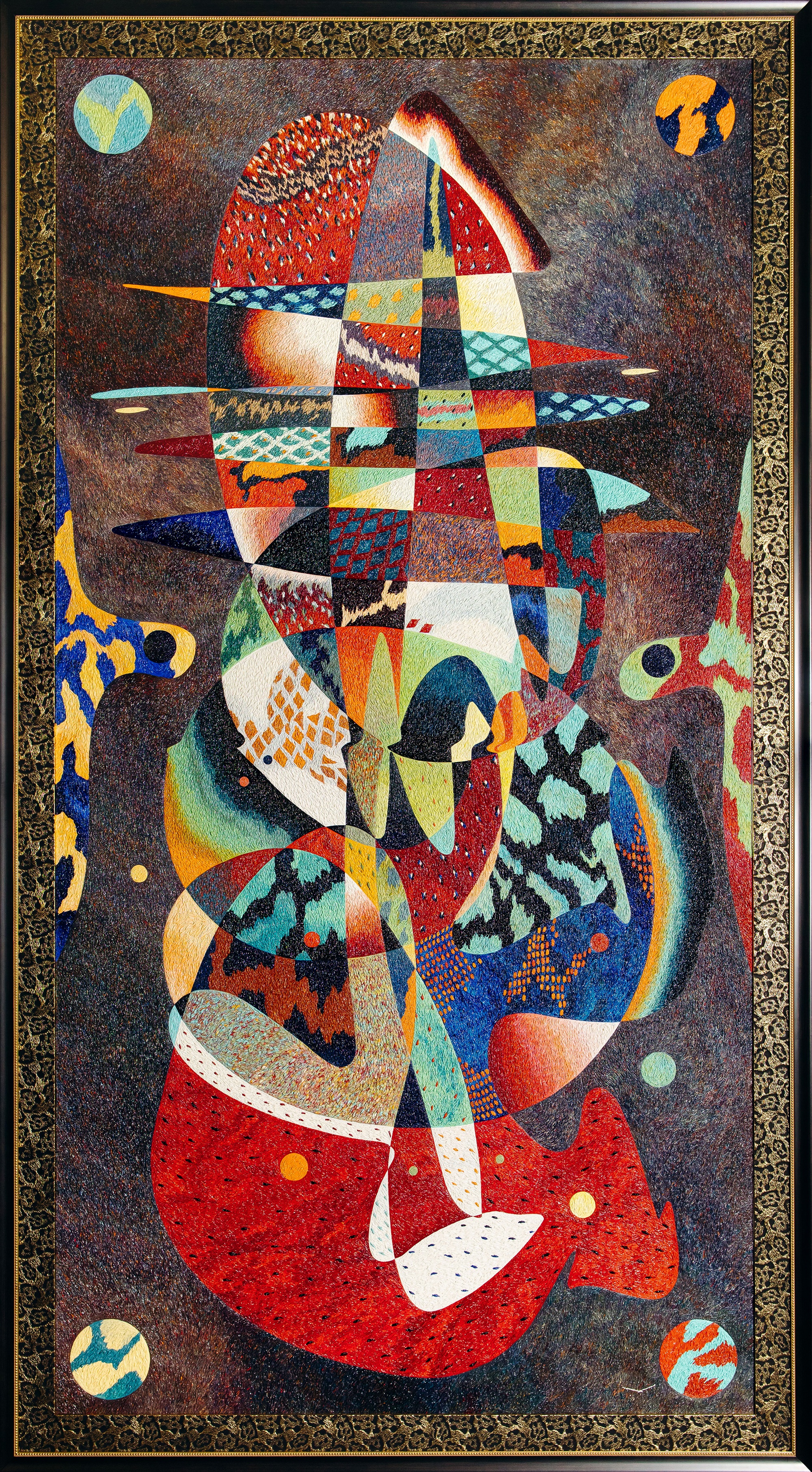
The Protector of the Souls (2015)
Oil on canvas
H 3.17 m × W 1.91 m
Dense layered structure organizes around a central tension. Scale supports simultaneous macro/micro perception. The work functions as a relational system rather than representation.
Complexity is stabilized through equilibrium across zones, sustaining controlled movement within a coherent field.
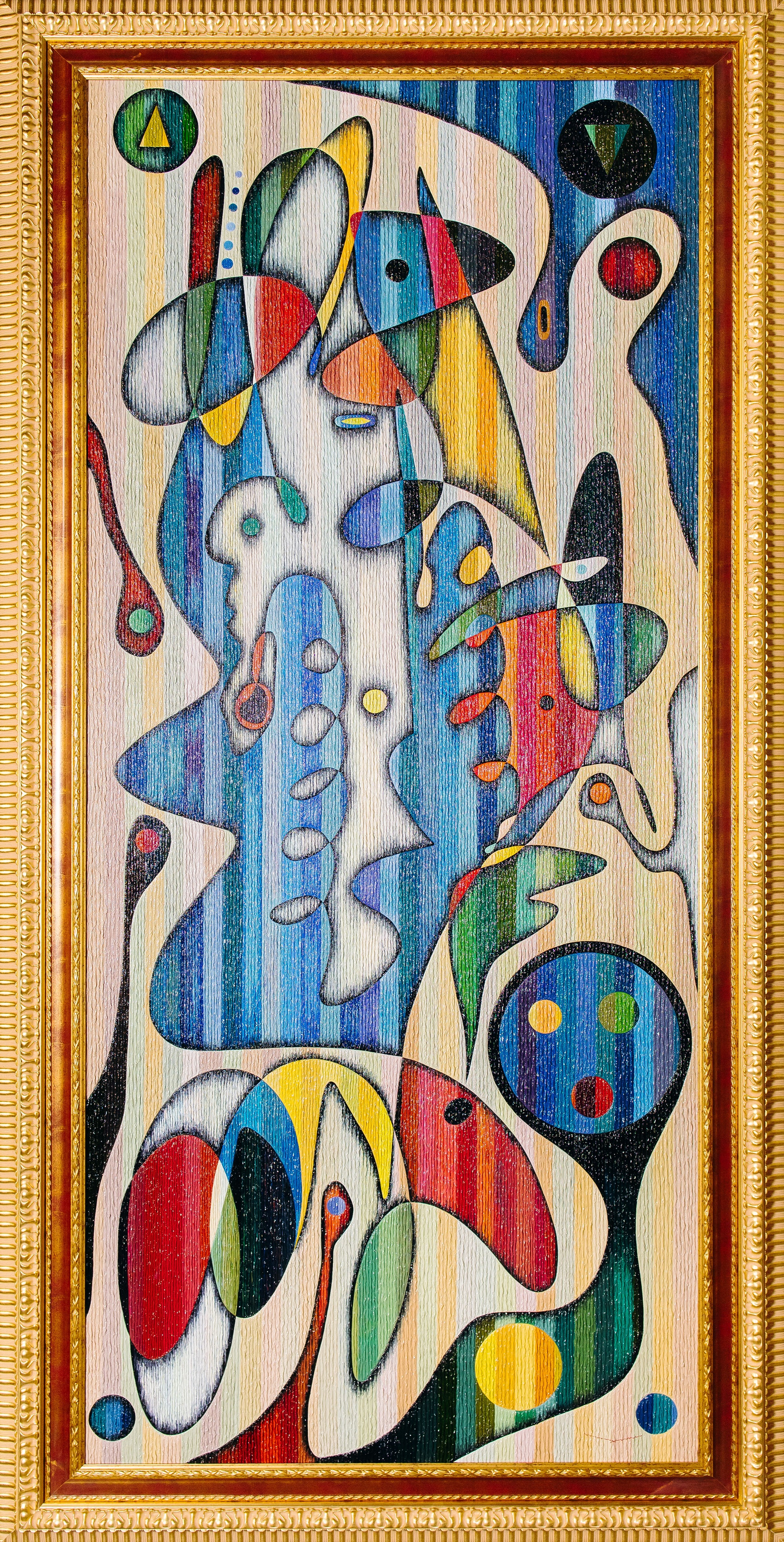
The Protector of Humanity (2017)
Oil on canvas
H 2.39 m × W 1.34 m
Compressed structure aligns vertical and lateral tensions into a unified system of interdependence.
Density is stabilized through internal coherence; perception remains continuous but contained within systemic order.
Meaning emerges through relational positioning rather than isolated form.
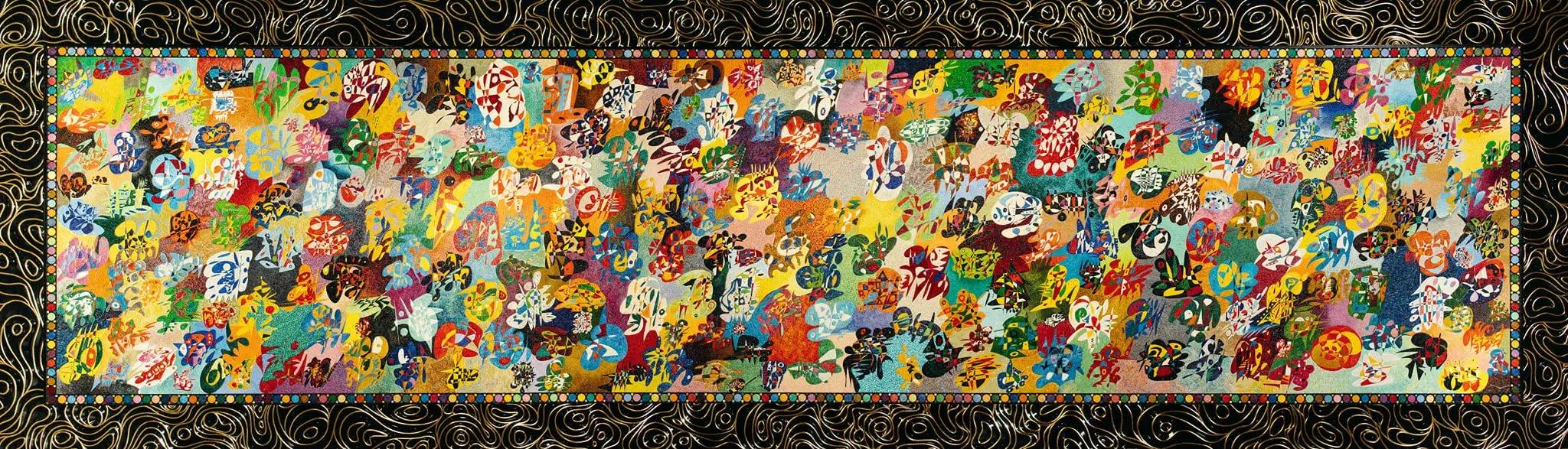
DIVINE DNA (2010–2016)
Oil on canvas
H 3.37 m × W 11.8 m
Extended horizontal field unfolds as continuous structure rather than discrete image.
Repetition and modular variation form a distributed network of relations without hierarchy.
Coherence is sustained through rhythm, continuity, and cumulative interaction.
Engagement becomes sequential, requiring sustained traversal of the field.
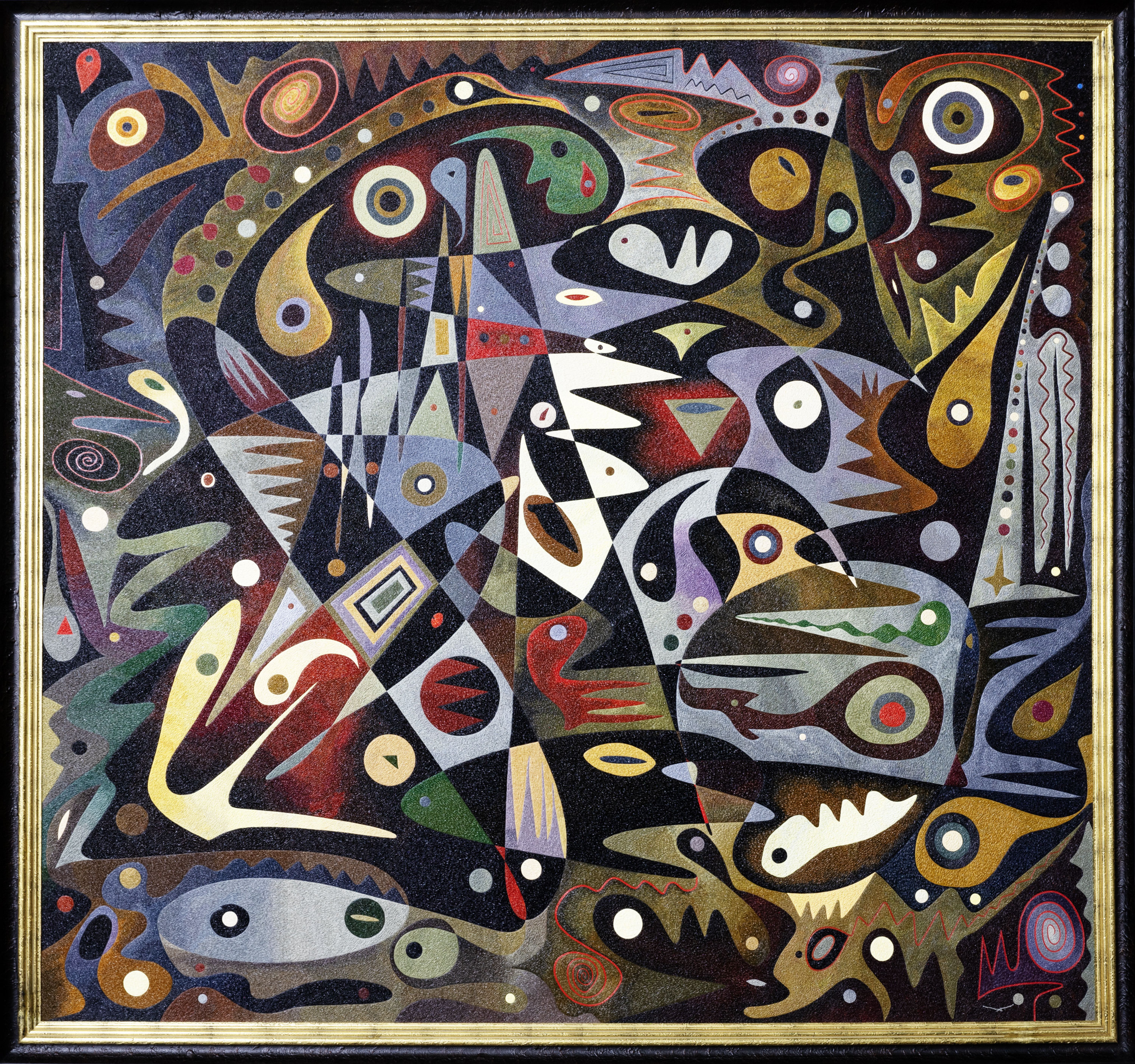
Battle of Gaugamela (2000–2002)
Oil on canvas
H 3.44 m × W 3.23 m
Early systemic structure organizes conflict as distributed tension rather than narrative scene.
Instability generates provisional order through zones of compression and expansion.
The work anticipates later stabilization of systemic relations.
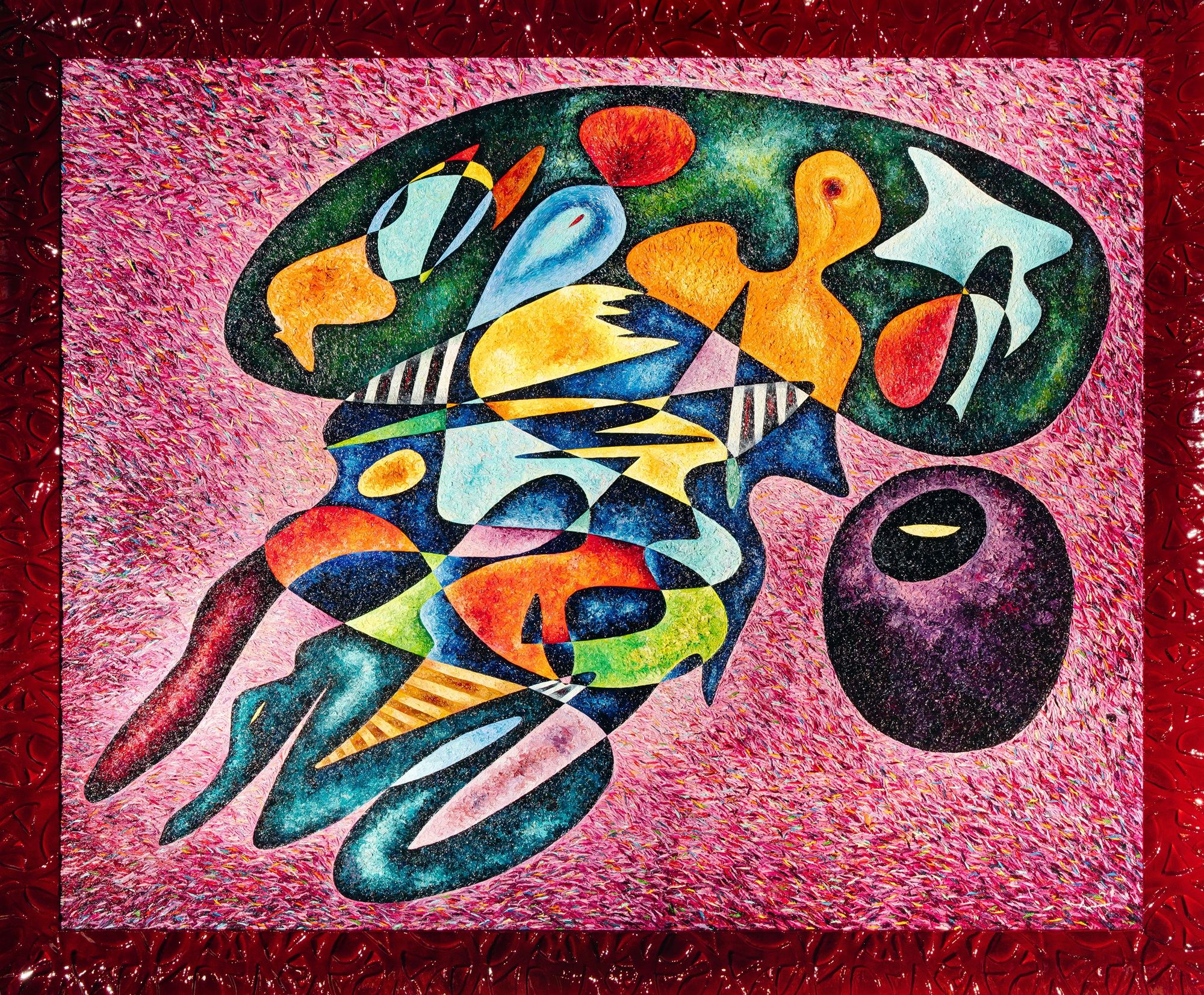
Philip II of Macedonia (2021)
Oil on canvas
H 1.83 m × W 2.09 m
Compressed system balances all elements within a unified relational field.
Coherence emerges through interlocking dependencies rather than hierarchy.
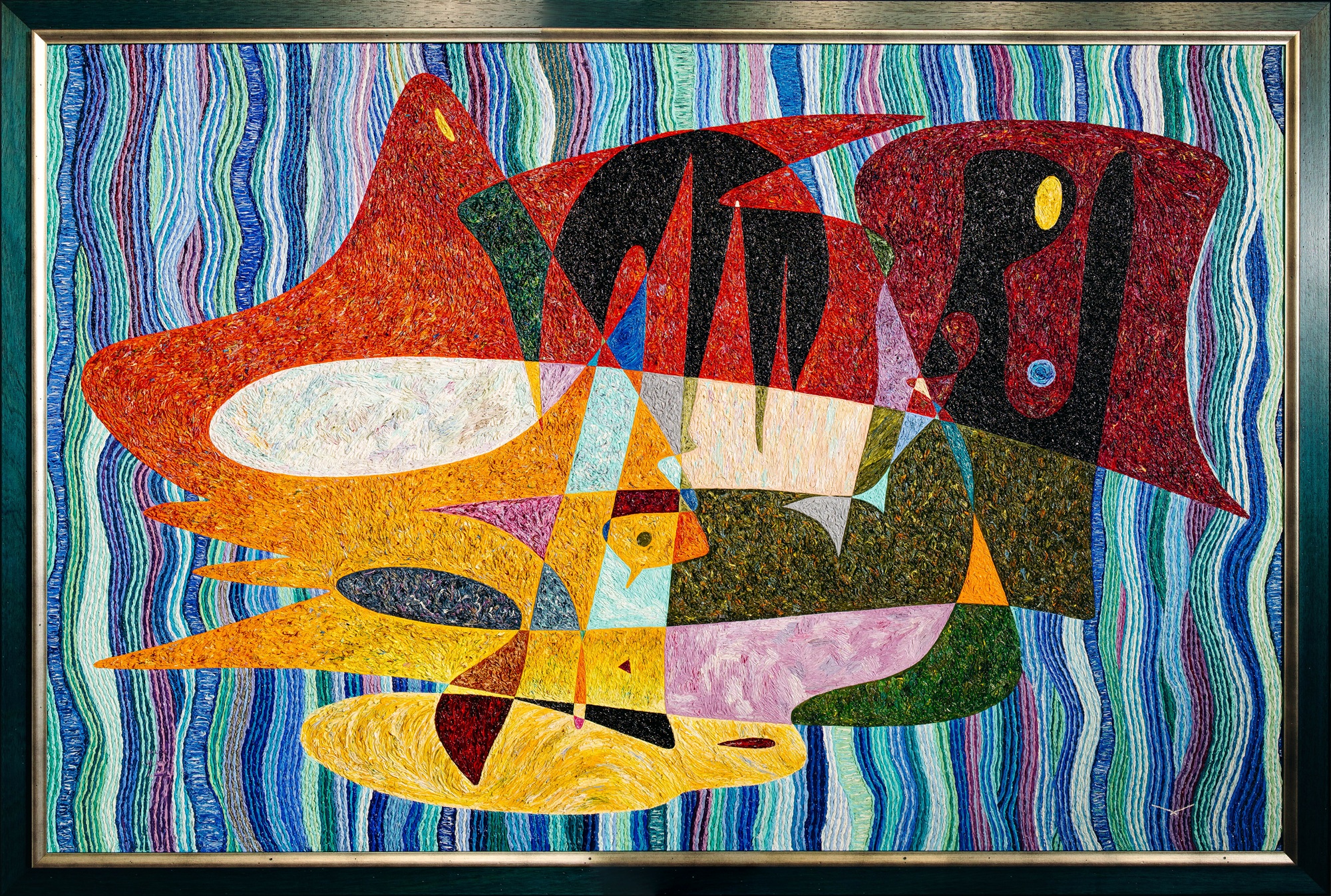
Horatio Nelson (2021)
Oil on canvas
H 1.61 m × W 2.07 m
Intersecting vectors generate balanced tension within a condensed field.
Meaning derives from positional relation; structural pressure is continuously redistributed.
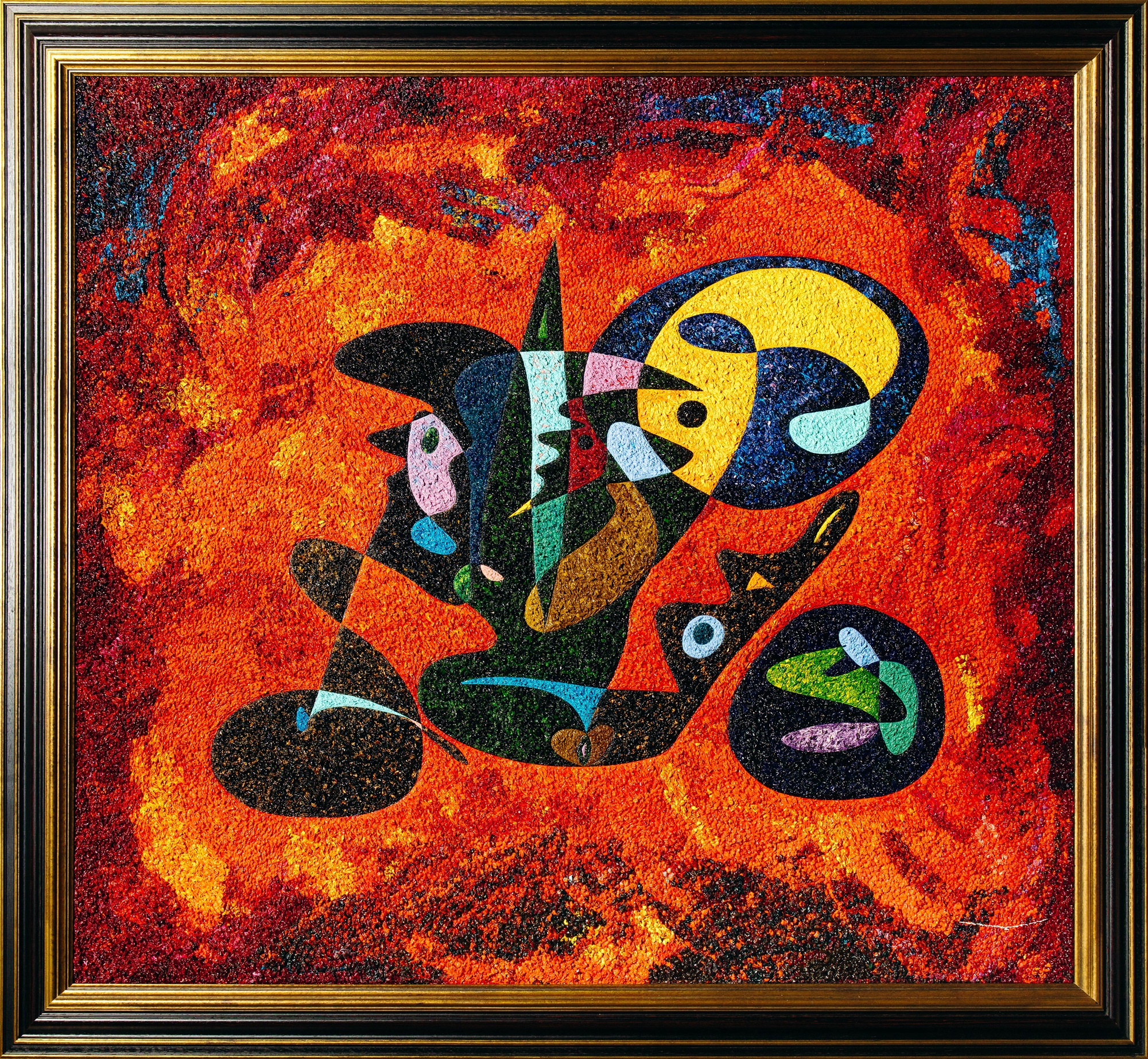
Gavrilo Princip (2022)
Oil on canvas
H 1.73 m × W 1.70 m
Near-square field produces equilibrium through circulating directional forces.
Controlled variation sustains complexity within stable relational balance.
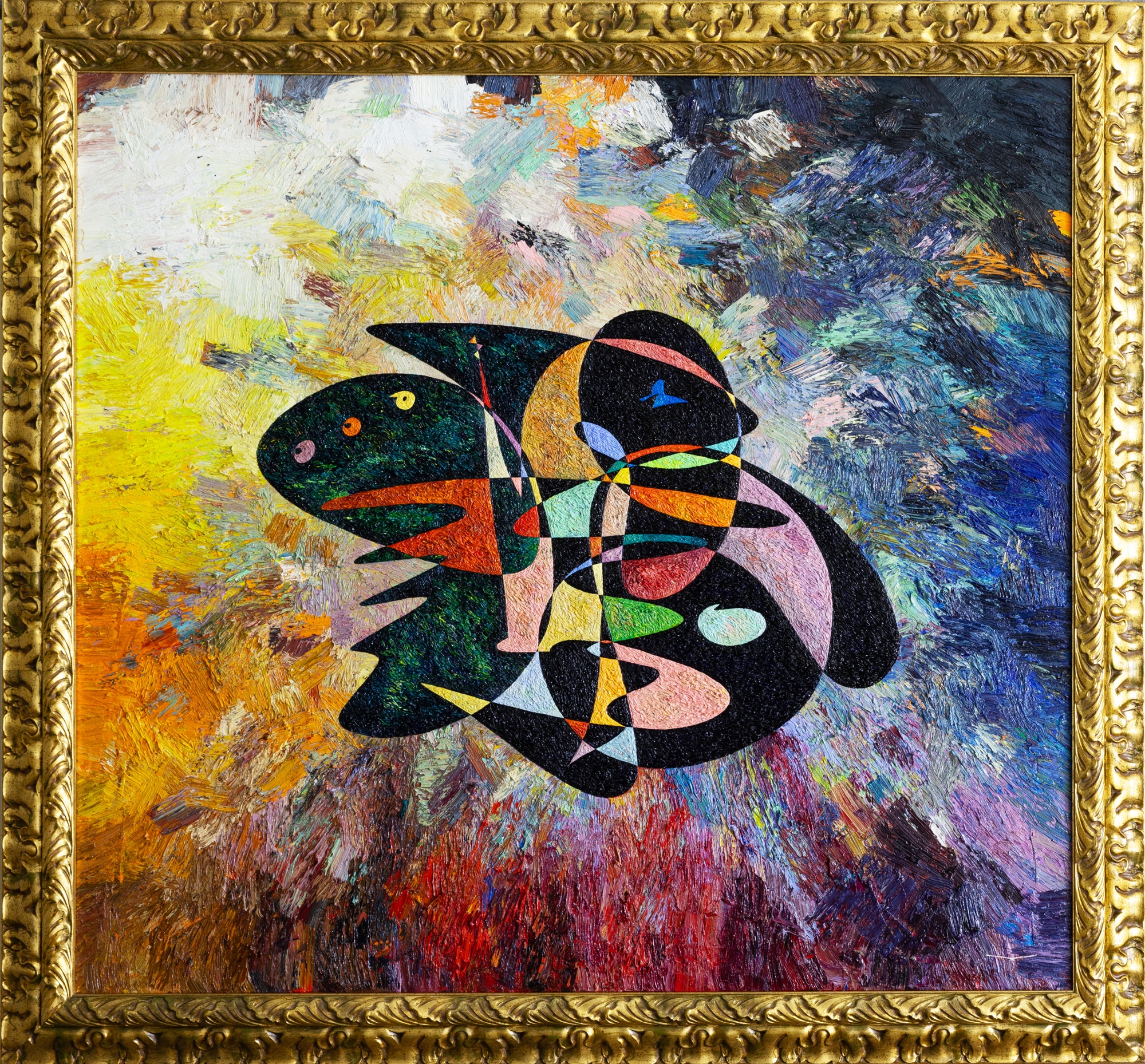
Franklin D. Roosevelt (2024)
Oil on canvas
H 1.69 m × W 1.72 m
Distributed tension replaces hierarchy as the organizing principle.
System stability emerges through relational dependency across all elements.
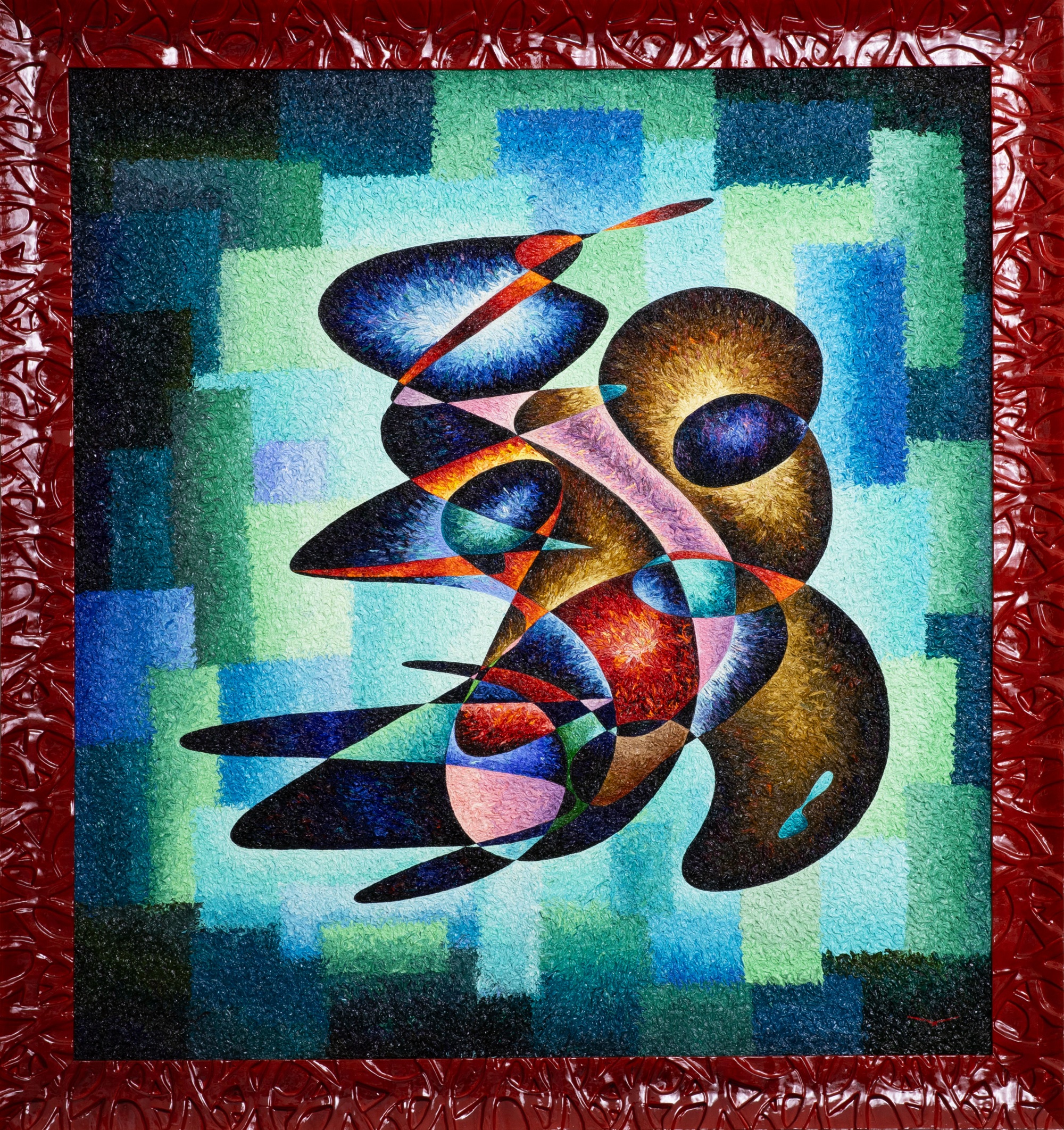
Stalin (2025)
Oil on canvas
H 1.70 m × W 1.67 m
Tightly regulated field compresses systemic relations into stable balance.
Variation is absorbed into structural coherence.
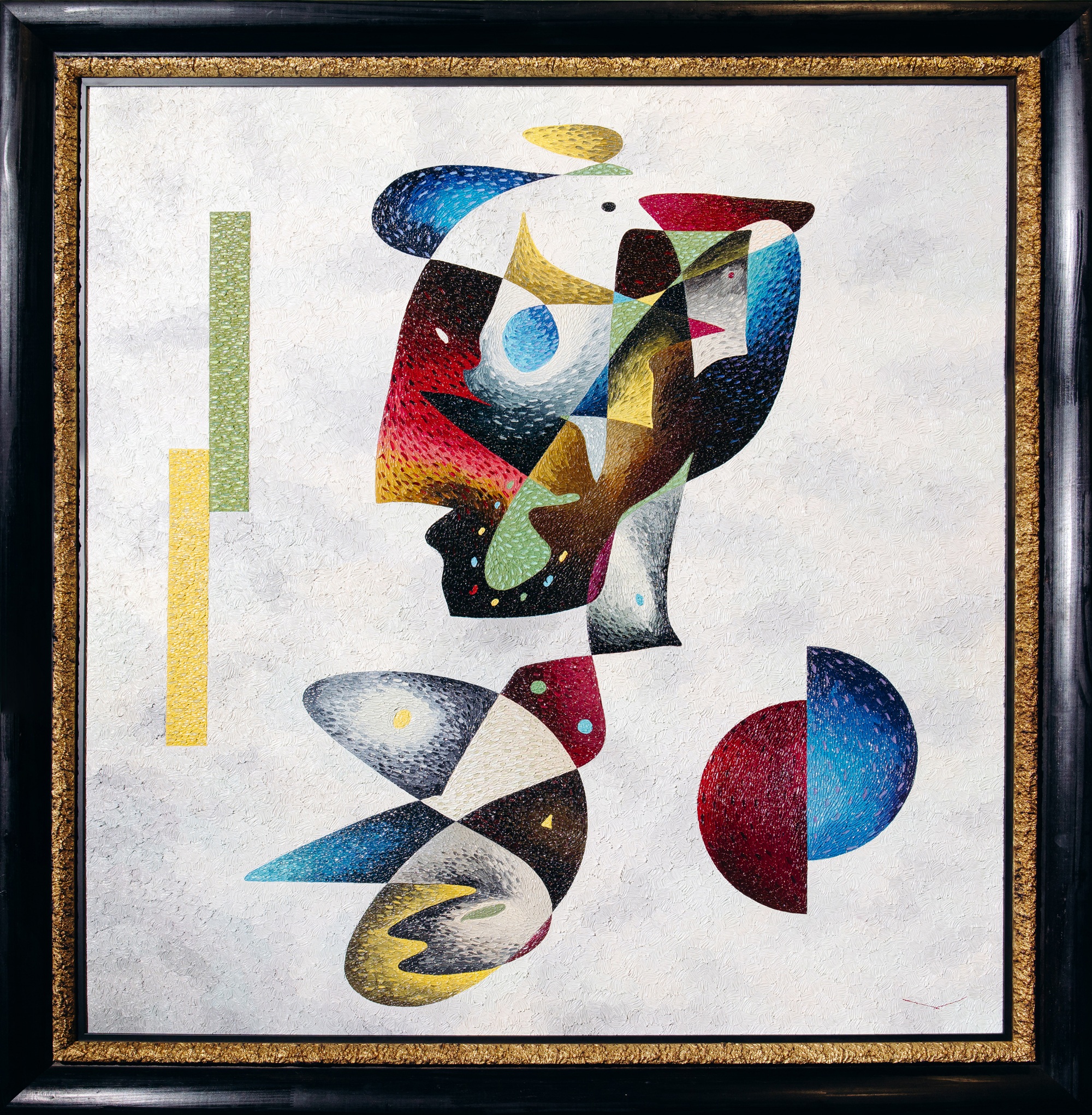
Emperor Hirohito (2024)
Oil on canvas
H 1.66 m × W 1.60 m
Compressed equilibrium replaces hierarchy with spatial interdependence.
Meaning arises through positional dependency within a self-regulating system.
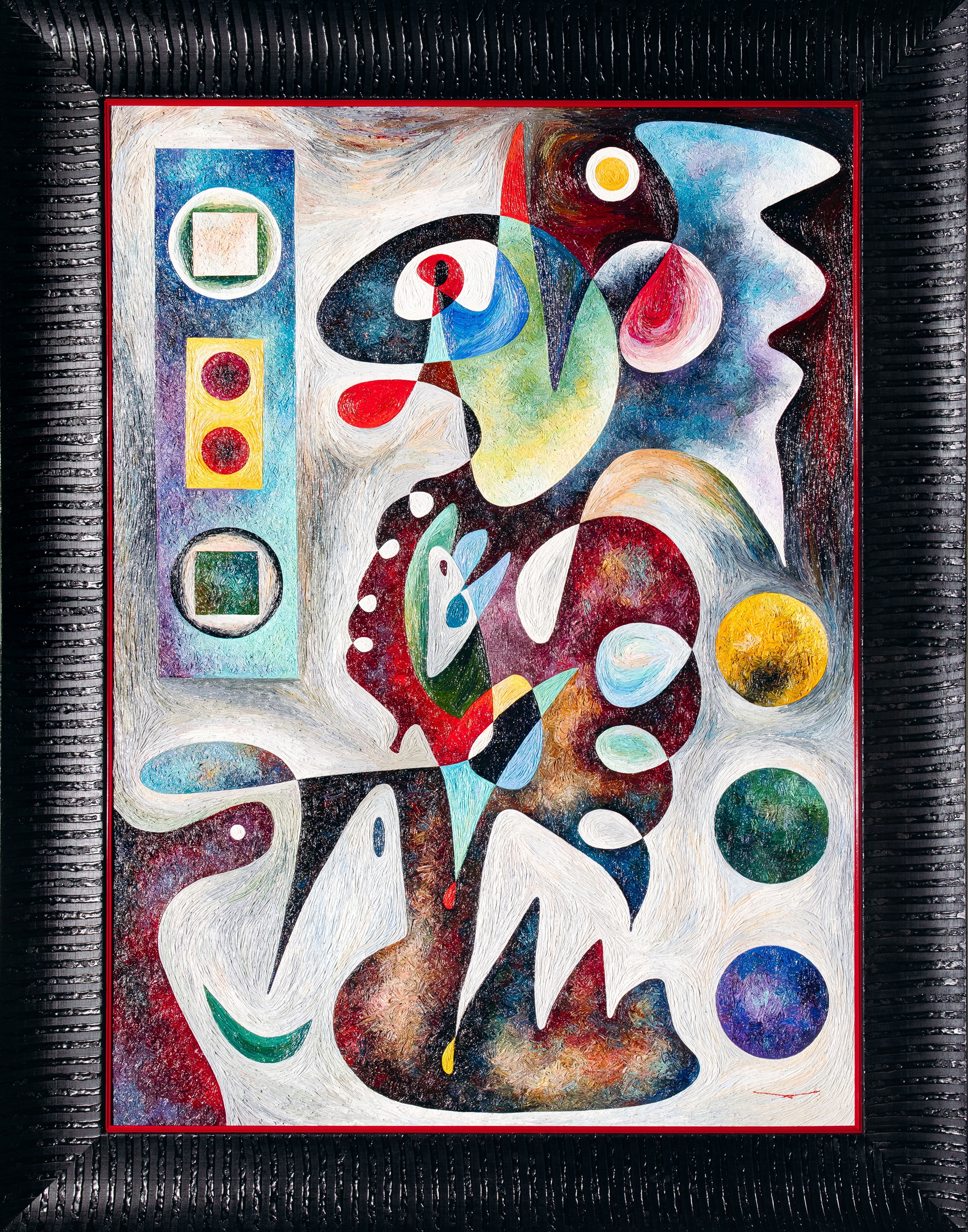
Xi Jinping (2025)
Oil on canvas
H 1.50 m × W 1.50 m
Maximally symmetrical field produces complete relational equilibrium.
All elements exist only through interdependence within a closed system.

The King of Democracy (2018)
Oil on canvas
H 0.77 m × W 0.82 m
Compressed scale intensifies relational density within a confined system.
Coherence emerges through concentrated interdependence rather than spatial expansion.
Technical Notes
Works employ layered modular systems distributed across structured fields. Organization varies between grid, axial, and centralized frameworks depending on systemic configuration.
Complexity emerges through relational interaction rather than accumulation, maintaining coherence between micro and macro structure.
Color functions structurally to reinforce relational order across the field.
Notes
- Clement Greenberg; Roger Fry; Yve-Alain Bois; Harold Rosenberg; Rosalind Krauss; Donald Judd; Michael Fried; James Meyer.
- Ludwig von Bertalanffy; Niklas Luhmann.
- Umberto Eco; Edgar Morin.
- Theodor W. Adorno.
Founding Document (FD) (2026): primary theoretical source for New Perfection and Systemic Abstraction; provides the system definitions, logic, and terminology used throughout this text.
Selected Bibliography
- Adorno, Aesthetic Theory (1970)
- Arnheim, Art and Visual Perception (1974)
- Bertalanffy, General System Theory (1968)
- Bois, Painting as Model (1990)
- DeLanda, Philosophy and Simulation (2011)
- Eco, The Open Work (1986)
- Fried, “Art and Objecthood” (1967)
- Fry, Vision and Design (1920)
- Greenberg, “Modernist Painting” (1961)
- Judd, “Specific Objects” (1965)
- Krauss, “Grids” (1979)
- Latour, Reassembling the Social (2005)
- Luhmann, Social Systems (1995)
- Merleau-Ponty, Phenomenology of Perception (1962)
- Meyer, Minimalism (2001)
- Morin, On Complexity (2008)
- Rosenberg, “The American Action Painters” (1952)
- Founding Document (FD). 2026. *New Perfection and Systemic Abstraction*. Primary theoretical manuscript.