
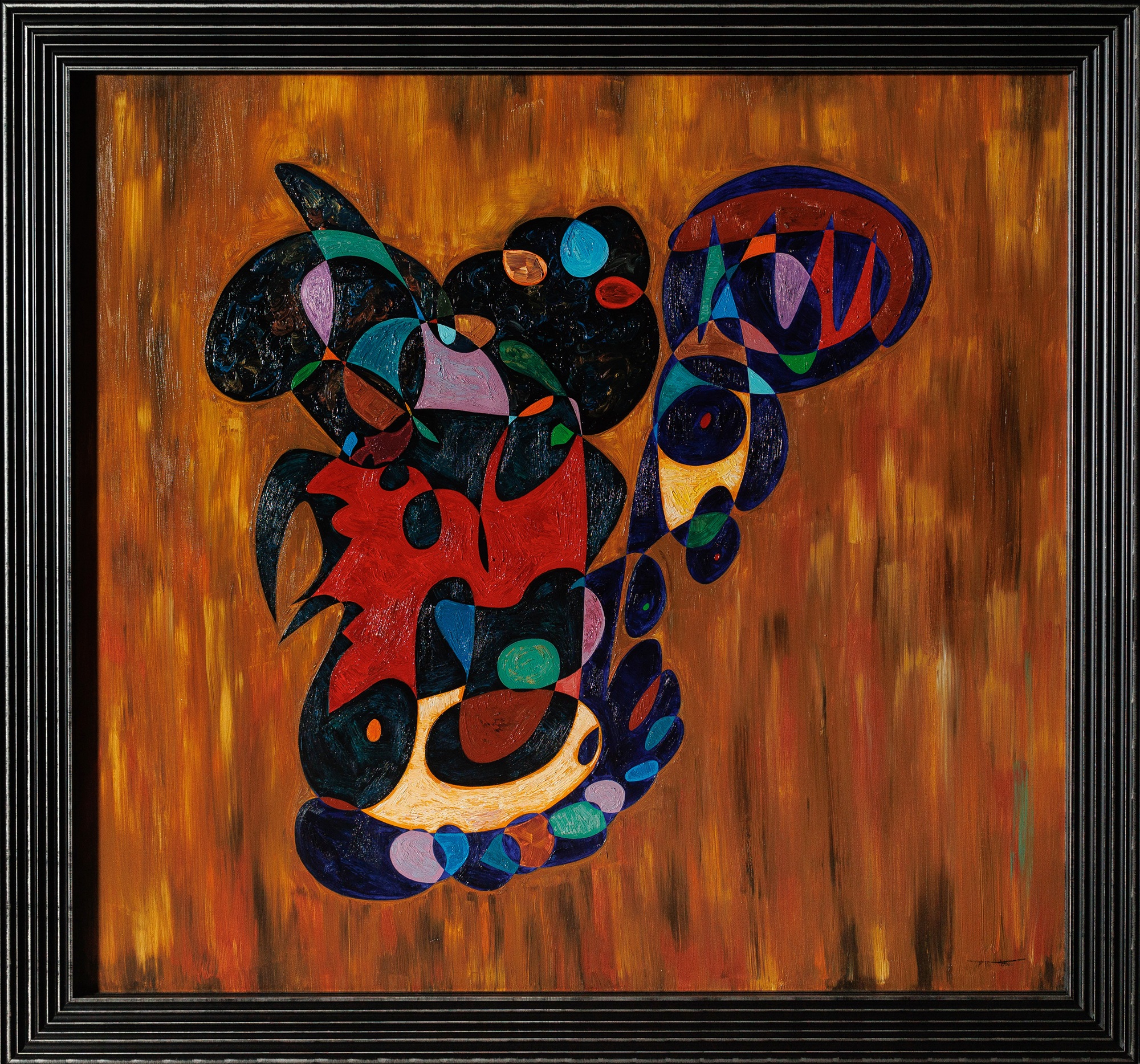
Darius III , 2005 Oil on canvas
A Fragmented Image of Sovereignty, Collapse, and Imperial Aftermath
A Field of Imperial Disintegration
Set within a charged and unstable surface, a central form emerges that resists coherent identity. The painting constructs a space where power is no longer unified, but dispersed across fragments of structure, colour, and historical residue.
Concept & Meaning
The work centres on the figure of Darius III, the last ruler of the Achaemenid Empire, reframed not as a historical portrait but as a fractured system of signs. Within the context of the Six Wars System, the painting functions as Codex II of Battle of Gaugamela (2000–2002), reinterpreting the moment of imperial collapse at the :contentReference[oaicite:0]{index=0}. Authority is presented as unstable, assembled, and in the process of dissolution rather than triumph or defeat.
Fragmentation & Visual Structure
The central configuration behaves like a disassembled body of power. Forms suggest armour, gaze, and structural hierarchy, yet none resolve into a unified figure. Instead, sovereignty is broken into visual components that circulate across the canvas, producing a language of instability rather than representation.
Archaeology of the Afterimage
The ochre and rust-toned ground functions as a field of aftermath rather than setting. Its layered vertical movement evokes erosion, heat, and residue, suggesting a landscape marked by conflict. Within this field, the figure of Darius III appears neither present nor absent, but suspended as an afterimage of imperial breakdown.
Materiality & Technique
Executed in oil on canvas, the work combines dense, heavily worked surface passages with more structured internal forms. Thick, directional brushwork builds a sense of pressure and erosion, while sharply defined shapes introduce moments of control within an otherwise unstable field.
Colour, Signal & Rupture
Colour operates as structural interruption rather than description. Deep blacks anchor the composition, while vivid accents of red, blue, and green punctuate its surface. These elements function as signals of rupture, suggesting internal conflict, fragmentation, and the breakdown of imperial coherence.
Scale & Spatial Condition
The near-square format establishes a contained yet unstable field in which the central form appears both dominant and vulnerable. The surrounding surface presses inward, creating a spatial tension between assertion and absorption, echoing the collapse of sovereign structure.
Crate Documentation
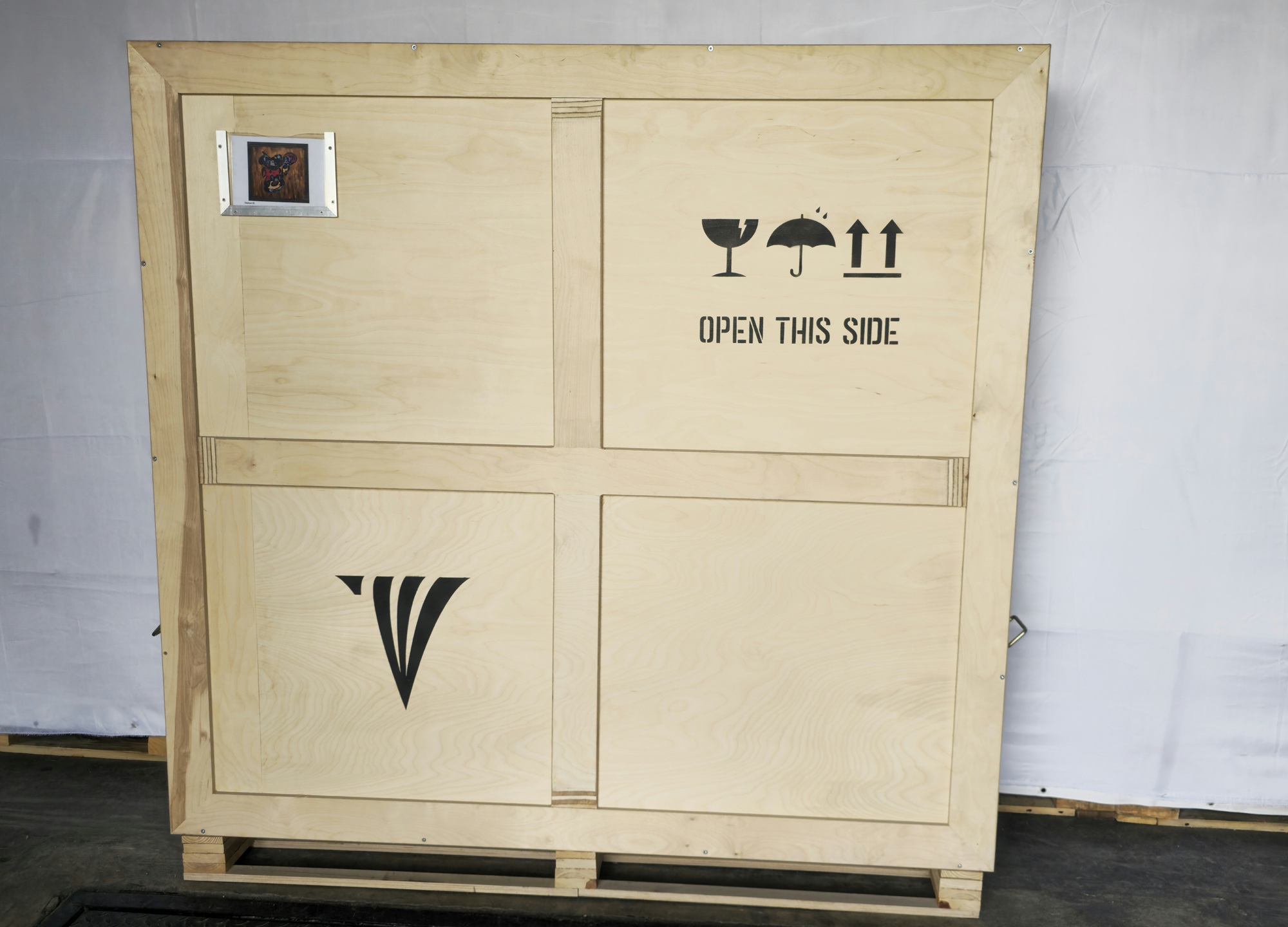
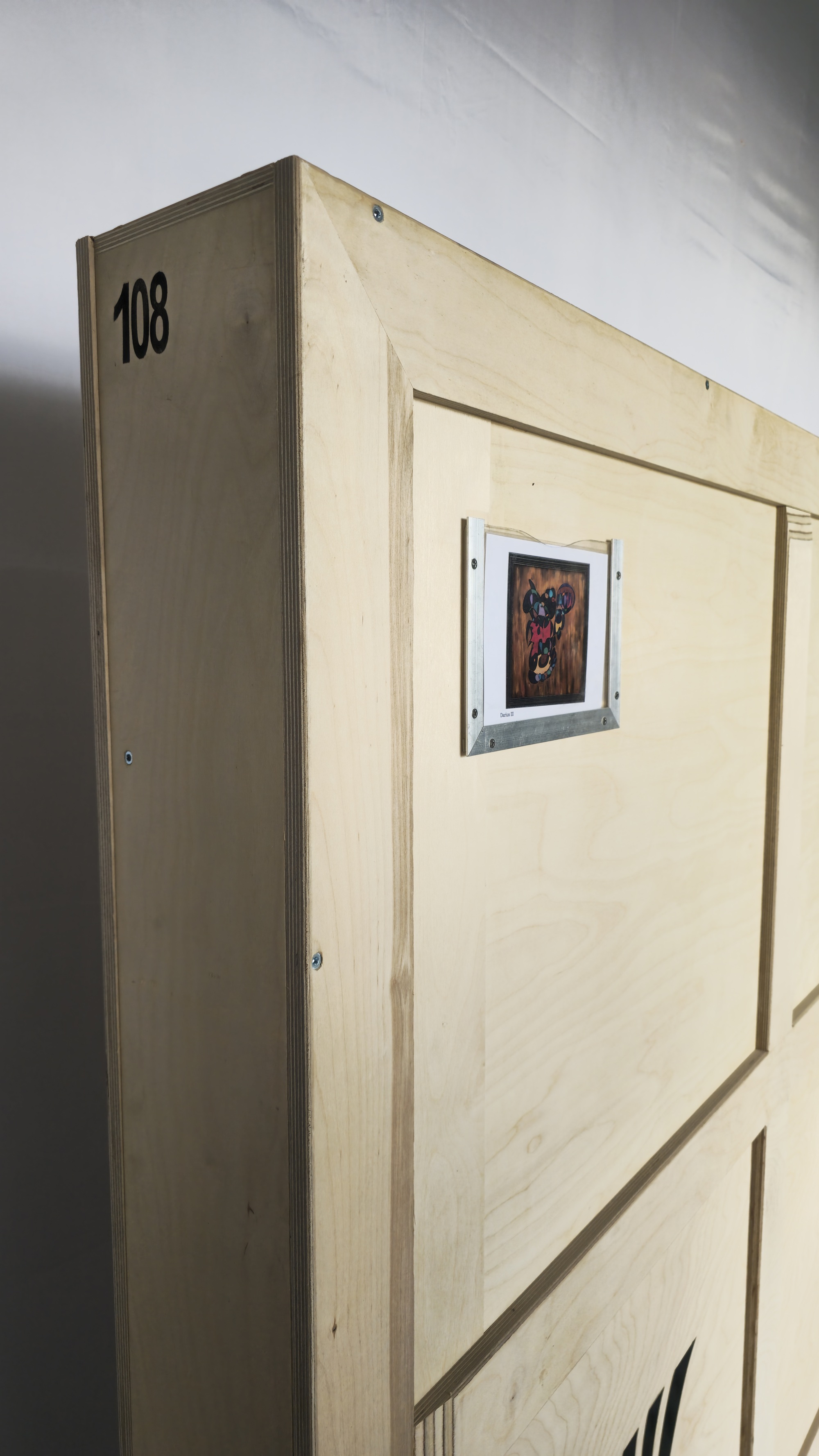
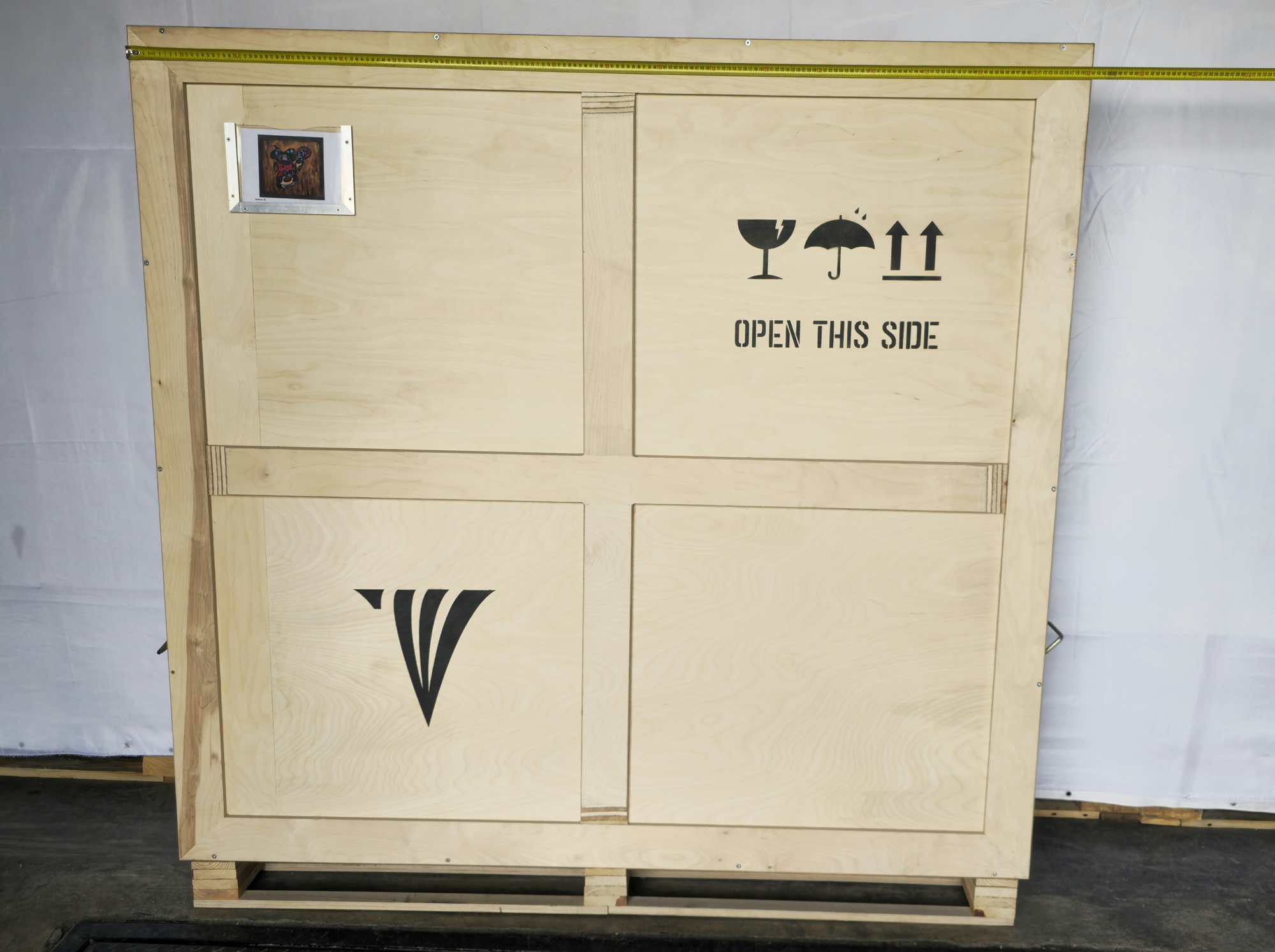
The custom transport crate and its identification markings document Darius III , 2005, ensuring controlled handling, archival tracking, and institutional movement of the work.
Crate Size Reference
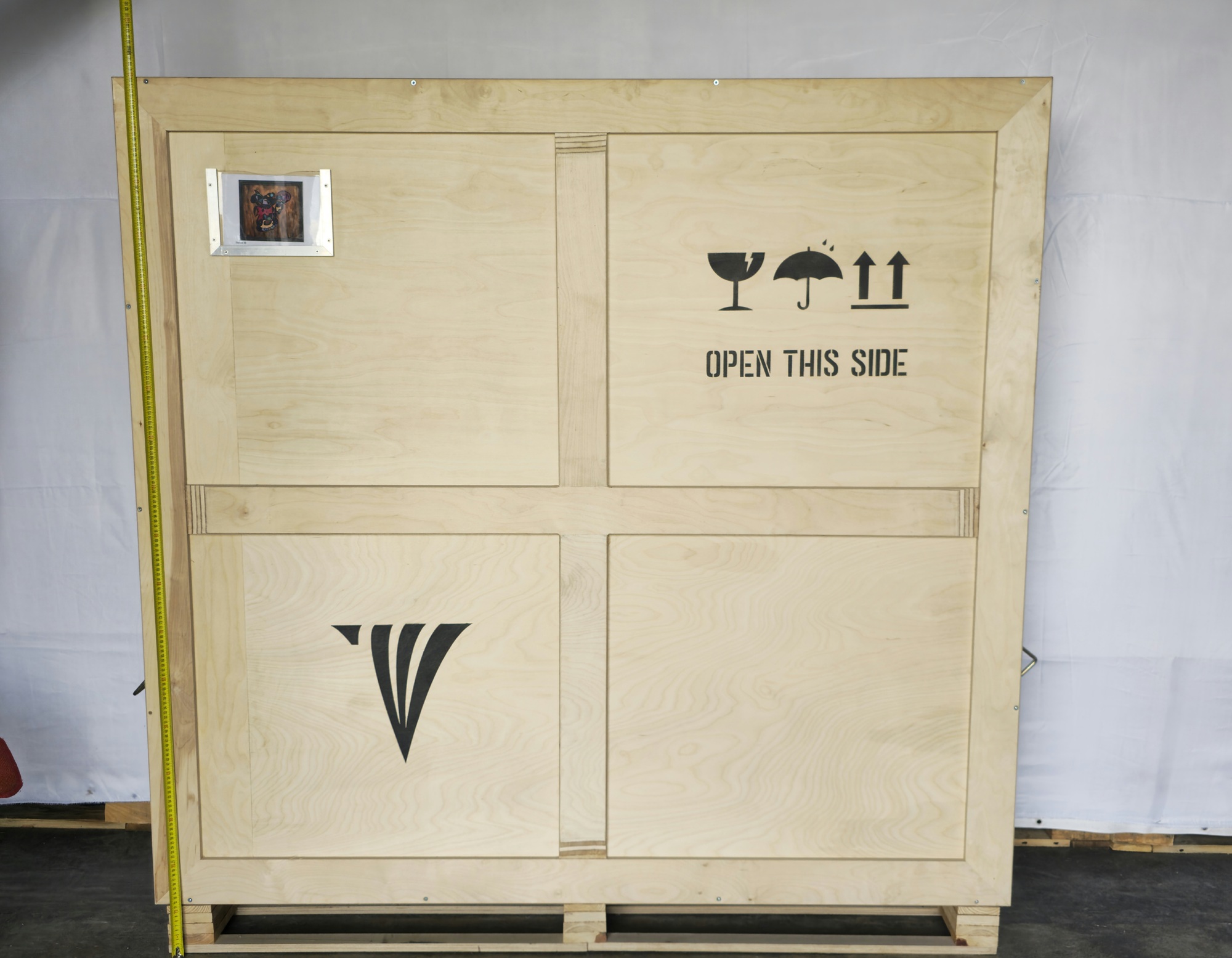
The transport crate for Darius III , 2005, is shown against a measuring tape to provide an accurate visual reference of its physical dimensions.
Explore the Work
Navigate catalogue data, curatorial writing, and collection context for Darius III , 2005.
Institutional Context
The work’s conceptual density and formal instability position it within contemporary collections exploring abstraction, historical memory, and systems of power. It operates as both image and archive, holding together the tensions of representation and collapse.
Closing Statement
Darius III reframes sovereignty as fragmentation. Rather than depicting historical defeat, it constructs a visual system in which power is dispersed across unstable forms, leaving only the residue of empire as image.
Artist Insights
Learn more about the artist’s practice, context, and conceptual framework.
View Artist Profile𐰘𐰙𐰖𐰢𐰡𐰘𐰟𐰞𐰜𐰛𐰡𐰘𐰚𐰝𐰡𐰖𐰡𐰖𐰝𐰤𐰙𐰖𐰝𐰘𐰘𐰣𐰤𐰡𐰘𐰣𐰘𐰢𐰝𐰘𐰡𐰥𐰞𐰘𐰣𐰤𐰞𐰢𐰖w𐰘𐰝𐰙𐰢𐰟𐰞𐰛𐰤𐰝𐰖𐰟𐰖𐰣𐰚𐰝𐰠𐰛𐰟𐰖𐰣𐰢𐰖𐰡𐰟𐰤𐰖𐰣𐰚𐰖𐰣𐰛𐰟𐰟