None

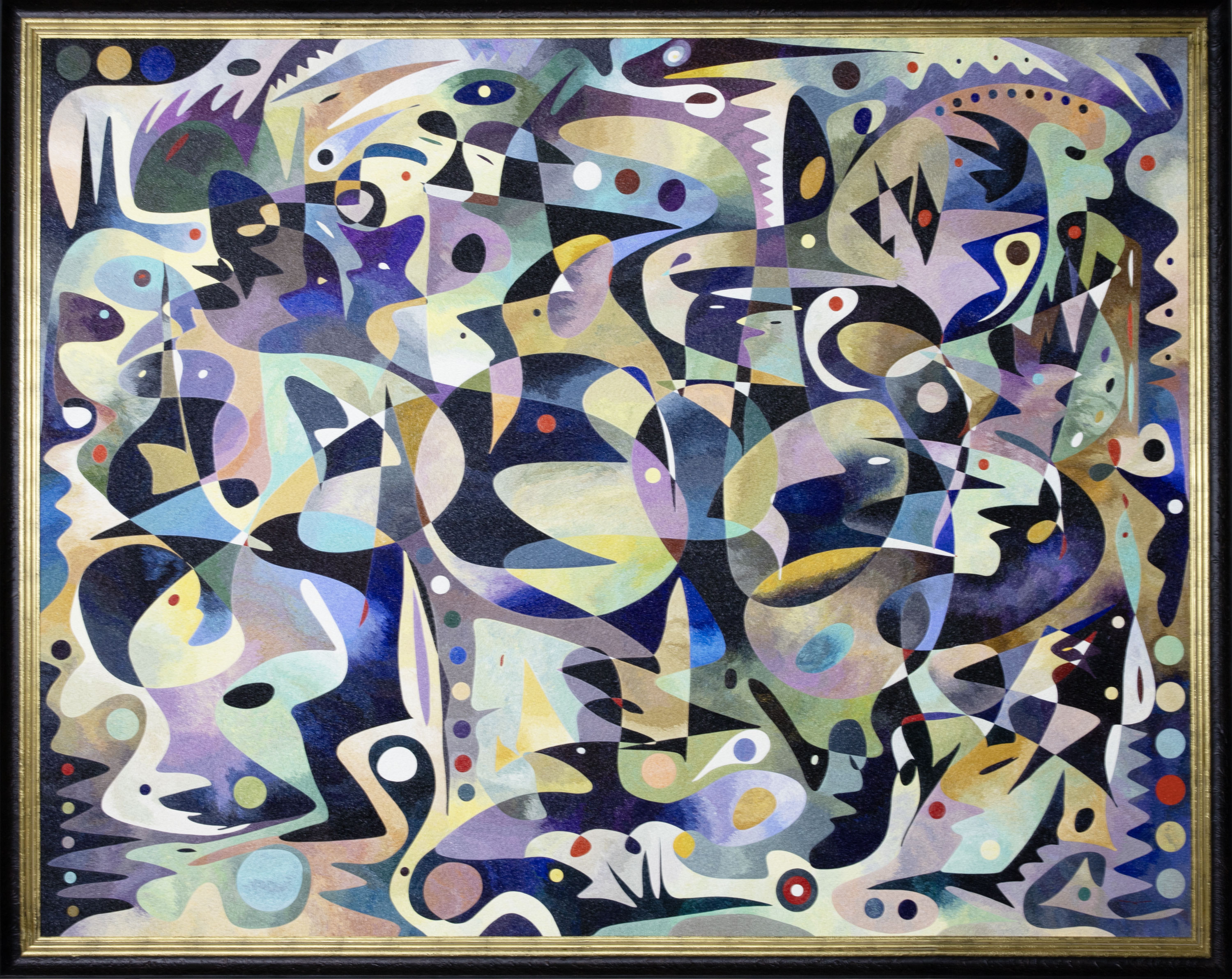
World War I, 2006 Oil on canvas

A monumental reflection on the scale, upheaval, and transformation of the First World War.

Monumental, immersive, and historically resonant

World War I is conceived as a spatial painting that reflects the immense scale and complexity of the global conflict that reshaped the 20th century.

View Work

Concept & Meaning

The painting approaches the First World War through abstraction, translating the vastness of the conflict into visual rhythms of tension, disruption, and convergence.

Rather than illustrating specific battles or figures, the composition evokes the collective forces of industrial warfare, shifting alliances, and the profound human impact of the era.

Through layered movement and structural contrasts, the work suggests the simultaneous chaos and order that defined the global conflict.

View Work

Scale & Spatial Impact

At monumental scale, the painting establishes a physical relationship with the viewer, inviting movement across the canvas and a gradual discovery of its shifting visual densities.

From afar, the composition reveals structural coherence; up close, it dissolves into energetic painterly gestures reflecting the intensity and fragmentation of war.

View Work

Artistic Context & Inspirations

Created in 2006, World War I reflects an exploration of historical memory, monumental composition, and the relationship between abstraction and collective experience.

The work engages with the idea of painting as a medium capable of carrying historical weight while maintaining openness of interpretation.

View Work

Materiality & Technique

Executed in oil on canvas, the surface is built through layers of accumulation and compression, emphasizing gesture, movement, and physical engagement with the medium.

Paint operates structurally rather than illustratively, creating a surface that records duration, energy, and artistic intention.

View Work

Institutional & Collector Context

World War I aligns with discussions surrounding historical narrative, monumental painting, and contemporary abstraction, making it suitable for:

  • Museum or institutional collections
  • Architectural installations or cultural institutions
  • Major private collections focused on historical or large-scale works

Its scale and conceptual clarity reinforce its presence as a singular and enduring work.

View Work

Closing Statement

World War I proposes painting as a vessel for historical reflection. Through scale, abstraction, and material presence, the work invites sustained engagement with one of the defining events of modern history.

A work to contemplate, move alongside, and return to.

View Work

Artist Insights

Monumental oil paintings exploring scale and historical presence

View Artist Profile

Expert Analysis on Style - World War I, 2006

World War I, 2006 is conceived as a monumental abstract composition in which the complexity of global conflict is translated into a dense visual field of intersecting forms and atmospheric color relationships. Instead of representing historical events directly, the artist constructs an intricate network of shapes that evokes the turbulence, fragmentation, and psychological tension associated with the First World War.

The composition unfolds as a layered structure where biomorphic silhouettes, geometric fragments, and flowing curves interact continuously. Through this visual language the painting transforms historical narrative into an expressive abstract system of movement, rhythm, and symbolic tension.

View Work

Atmospheric Chromatic Structure

The palette of the painting is dominated by cool tones—deep blues, muted greens, soft violets, and pale luminous yellows. These colors generate an atmospheric depth that contrasts with darker structural elements.

The chromatic transitions appear almost nebulous, creating an impression of drifting clouds or distant horizons. This atmospheric quality suggests a vast and uncertain environment in which forms emerge, dissolve, and recombine.

Subtle accents of red punctuate the composition, introducing flashes of tension that interrupt the otherwise fluid color field.

View Work

Biomorphic Abstraction

The painting contains numerous organic shapes that resemble creatures, masks, wings, or abstract figures. These biomorphic motifs appear throughout the composition, creating the sensation that the canvas is inhabited by a multitude of symbolic presences.

These forms are not literal representations but visual suggestions that invite interpretation. Their curved outlines and fluid contours generate an impression of continuous transformation.

The interaction between these shapes contributes to the painting’s sense of vitality and complexity.

View Work

Fragmented Spatial Composition

The surface of the painting is divided into multiple overlapping zones created by intersecting lines and shifting color fields. These divisions fragment the visual space into a series of interconnected segments.

Rather than forming a single focal point, the composition encourages the viewer to explore numerous visual pathways across the canvas.

This fragmentation produces a sense of spatial instability, reinforcing the painting’s dynamic visual rhythm.

View Work

Rhythmic Movement

Repeating curves, circular elements, and elongated silhouettes create a strong rhythmic flow throughout the composition. The eye moves across the canvas in a continuous cycle of discovery.

Rather than presenting a static arrangement, the painting suggests constant motion, as if the forms are drifting and reorganizing within a shifting visual atmosphere.

This rhythmic organization gives the painting a sense of internal energy that animates the entire surface.

View Work

Decorative Framing and Contained Universe

The ornate frame surrounding the painting provides a structured boundary that contrasts with the fluid complexity inside the composition.

This boundary emphasizes the idea that the painting functions as a self-contained visual universe where multiple symbolic forms coexist within a carefully balanced structure.

The contrast between the stable frame and the dynamic interior heightens the sense of contained energy within the work.

View Work

Style Classification

World War I can be situated within the broader tradition of monumental contemporary abstraction, drawing upon several artistic approaches.

  • Monumental abstract expression
  • Biomorphic surreal abstraction
  • Symbolic narrative abstraction

The synthesis of atmospheric color, organic shapes, and fragmented geometry results in a distinctive visual language that balances expressive freedom with compositional structure.

View Work

Summary

World War I, 2006 transforms historical inspiration into a complex visual ecosystem of shapes, colors, and rhythms. Through its monumental scale and intricate abstract structure, the painting invites viewers to explore an expansive symbolic landscape where movement, tension, and transformation unfold across the canvas.

View Work

World War I, 2006 - Expert Analysis of Narrative and Symbolism

World War I, 2006 interprets the First World War through an abstract visual language where historical narrative is transformed into a symbolic network of interacting forms. Instead of depicting battles, soldiers, or landscapes directly, the artist constructs a dense visual environment that evokes the psychological, strategic, and human dimensions of global conflict.

The painting functions as a symbolic field of forces. Shapes appear to emerge, collide, and dissolve across the canvas, suggesting the complex and often chaotic dynamics that defined the war. Through this approach, the composition becomes a visual meditation on the fragmentation of societies and the transformation of the modern world.

View Work

Fragmented Forms – A World in Disruption

The composition is structured through numerous intersecting shapes and fragmented spatial divisions.

These fragmented forms may symbolize:

  • The political and territorial divisions that defined the early twentieth century
  • The collapse of established empires and alliances
  • The disruption of traditional social structures
  • The instability and uncertainty experienced during wartime

The visual fragmentation mirrors the historical fragmentation of Europe and the global order during the First World War.

View Work

Biomorphic Silhouettes – Human Presence Within Conflict

Among the geometric structures, numerous organic shapes appear that resemble faces, masks, birds, or abstract human figures.

These biomorphic forms may represent:

  • The countless individuals affected by the war
  • The psychological dimension of fear and endurance
  • The transformation of human identity during conflict
  • The presence of life within a mechanized battlefield

The coexistence of organic silhouettes and rigid geometry reflects the tension between human vulnerability and the impersonal systems of modern warfare.

View Work

Directional Motifs – Movement of Armies and Strategy

Throughout the painting, elongated forms, curved trajectories, and arrow-like silhouettes suggest directional movement across the composition.

These motifs may symbolize:

  • The movement of armies across vast territories
  • The strategic maneuvers that shaped the conflict
  • The constant shifting of front lines
  • The flow of events across the global stage

The painting therefore evokes the sense of a vast, constantly shifting battlefield.

View Work

Chromatic Atmosphere – Emotional Landscape

The cool palette of blues, greens, and soft violets creates an atmospheric environment that contrasts with darker structural forms.

  • Blues and violets → distance, melancholy, and reflection
  • Muted greens → landscapes transformed by war
  • Pale luminous tones → moments of quiet or fragile hope
  • Red accents → flashes of violence and disruption

These chromatic relationships produce an emotional landscape that reflects the psychological weight of the conflict.

View Work

Circular Motifs – Cycles of History

Small circular forms appear throughout the composition, functioning as visual points of rhythm and balance.

Symbolically, these circles may represent:

  • The cycles of historical conflict
  • The interconnected nature of global events
  • The persistence of memory and remembrance
  • The passage of time surrounding historical transformation

These recurring elements unify the composition while suggesting that the consequences of war resonate far beyond a single moment in history.

View Work

The Frame – History Preserved in Memory

The ornate golden frame surrounding the painting establishes a boundary between the viewer’s present and the symbolic historical world contained within the composition.

This frame may symbolize:

  • The passage of time that transforms events into history
  • The preservation of memory through art
  • The transformation of conflict into cultural reflection

The frame reinforces the perception of the painting as a visual monument dedicated to remembering a defining global event.

View Work

Overall Symbolic Interpretation

World War I, 2006 presents the First World War not as a single narrative but as a complex web of human actions, strategic decisions, and historical forces.

Through fragmentation, rhythmic movement, and symbolic imagery, the painting suggests that global conflicts emerge from interconnected systems of power, ambition, and circumstance.

Ultimately, the work becomes a meditation on the transformation of the modern world and the enduring human consequences of large-scale conflict.

View Work
𐰘𐰙𐰖𐰢𐰡𐰘𐰟𐰞𐰜𐰛𐰡𐰘𐰚𐰝𐰡𐰖𐰡𐰖𐰝𐰤𐰙𐰖𐰝𐰘𐰘𐰣𐰤𐰡𐰘𐰣𐰘𐰢𐰝𐰘𐰡𐰥𐰞𐰘𐰣𐰤𐰞𐰢𐰖w𐰘𐰝𐰙𐰢𐰟𐰞𐰛𐰤𐰝𐰖𐰟𐰖𐰣𐰚𐰝𐰠𐰛𐰟𐰖𐰣𐰢𐰖𐰡𐰟𐰤𐰖𐰣𐰚𐰖𐰣𐰛𐰟𐰟