
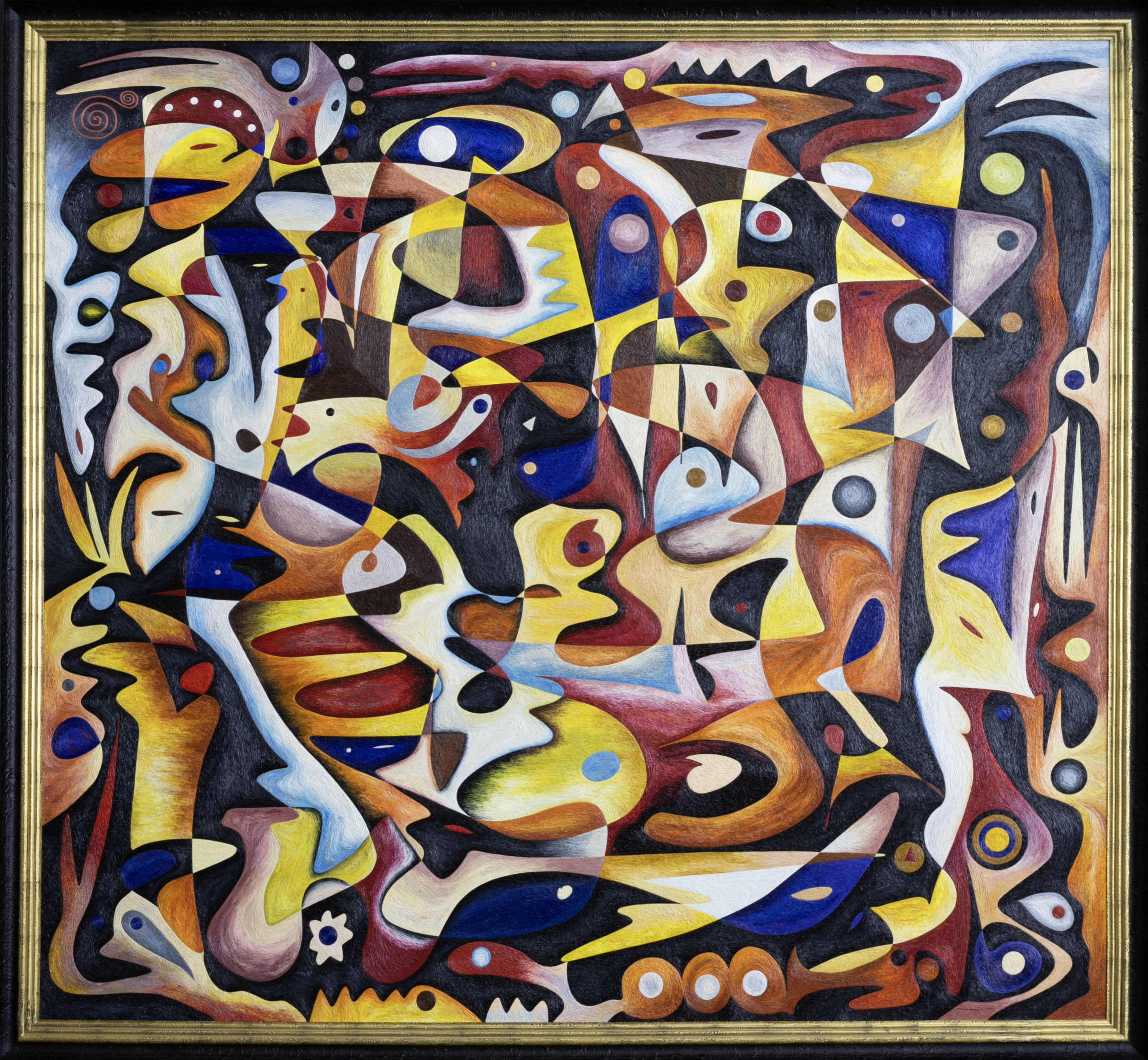
Battle of Waterloo, 2003 Oil on canvas
A monumental depiction of strategy, valor, and the forces that shaped modern Europe.
Monumental, immersive, and historically charged
Battle of Waterloo is conceived as a spatial painting, capturing the intensity, scale, and decisive moments of Napoleon’s final battle.
Concept & Meaning
The painting interprets the confrontation between Napoleon and the Allied forces under Wellington and Blücher, emphasizing the tension, strategy, and shifting momentum of battle.
Virtosu presents Waterloo as a visual language of command and maneuver, where compositional flows mirror the dynamics of armies, terrain, and chance.
Rather than depicting individual combatants, the work embodies the collective forces, chaos, and turning points that determined the outcome of European history.
Scale & Spatial Impact
At 3.0 m height and 3.6 m width, the painting engages the viewer physically, inviting movement alongside the canvas to experience shifting densities and strategic tension.
From a distance, the composition conveys overall formations and coherence; up close, it dissolves into energetic brushstrokes, reflecting the simultaneous immediacy and vastness of conflict.
Artistic Context & Inspirations
Created in 2003, Battle of Waterloo was developed during a period of reflection on historical narrative, monumental composition, and large-scale painterly exploration.
The work demonstrates a nuanced orchestration of form, movement, and texture, providing viewers with an immersive encounter with both history and abstraction.
Materiality & Technique
Executed in oil on canvas, the surface reflects layered application, compression, and dynamic brushwork. Materiality conveys both energy and weight, mirroring historical intensity.
Paint functions structurally, emphasizing duration, force, and deliberate engagement with the medium rather than illustration.
Institutional & Collector Context
Battle of Waterloo aligns with discussions of historical narrative, post-abstraction, and monumental painting, making it suitable for:
- Museum or institutional collections
- Architectural or site-specific installations
- Major private collections focused on historical statement works
Its singular presence reinforces rarity, authority, and lasting significance.
Closing Statement
Battle of Waterloo asserts presence and endurance. Through scale, material, and structure, it presents painting as a carrier of history and encoded meaning—timeless, physical, and resonant.
A work to study, move alongside, and return to.
Explore the Work
Navigate through documentation, critical essays, and collection placement for Battle of Waterloo, 2003.
𐰘𐰙𐰖𐰢𐰡𐰘𐰟𐰞𐰜𐰛𐰡𐰘𐰚𐰝𐰡𐰖𐰡𐰖𐰝𐰤𐰙𐰖𐰝𐰘𐰘𐰣𐰤𐰡𐰘𐰣𐰘𐰢𐰝𐰘𐰡𐰥𐰞𐰘𐰣𐰤𐰞𐰢𐰖w𐰘𐰝𐰙𐰢𐰟𐰞𐰛𐰤𐰝𐰖𐰟𐰖𐰣𐰚𐰝𐰠𐰛𐰟𐰖𐰣𐰢𐰖𐰡𐰟𐰤𐰖𐰣𐰚𐰖𐰣𐰛𐰟𐰟