
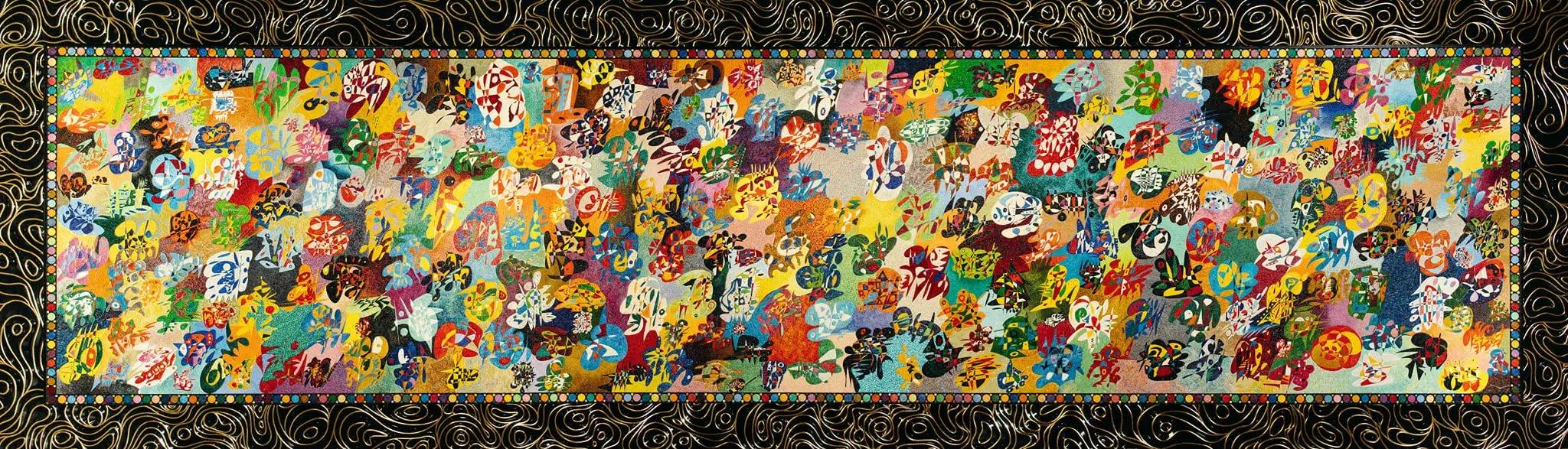
Divine DNA, 2016 Oil on canvas
The unity of humanity as the last refuge for preserving our collective future.
Monumental, immersive, and architecturally scaled
Divine DNA is conceived as a spatial painting rather than a conventional pictorial object—one of the most intelligent works the world has produced, depicting the profound unity of humanity.
Concept & Meaning
Divine DNA depicts the unity of all nations of the world through abstraction. The work approaches humanity not through flags, borders, or figurative representation, but through the idea of a shared, underlying code—a collective origin that transcends geography, culture, and history.
Virtosu interprets Divine DNA as a universal language, a symbolic system in which all human differences are variations of a single source. The painting’s continuous visual flow suggests coexistence rather than separation, emphasizing interconnectedness, simultaneity, and mutual presence.
Rather than illustrating diversity, the work embodies it structurally: through layered rhythms, interruptions, and convergences that mirror the complexity of global humanity within a unified whole.
See how the installation worksScale & Spatial Impact
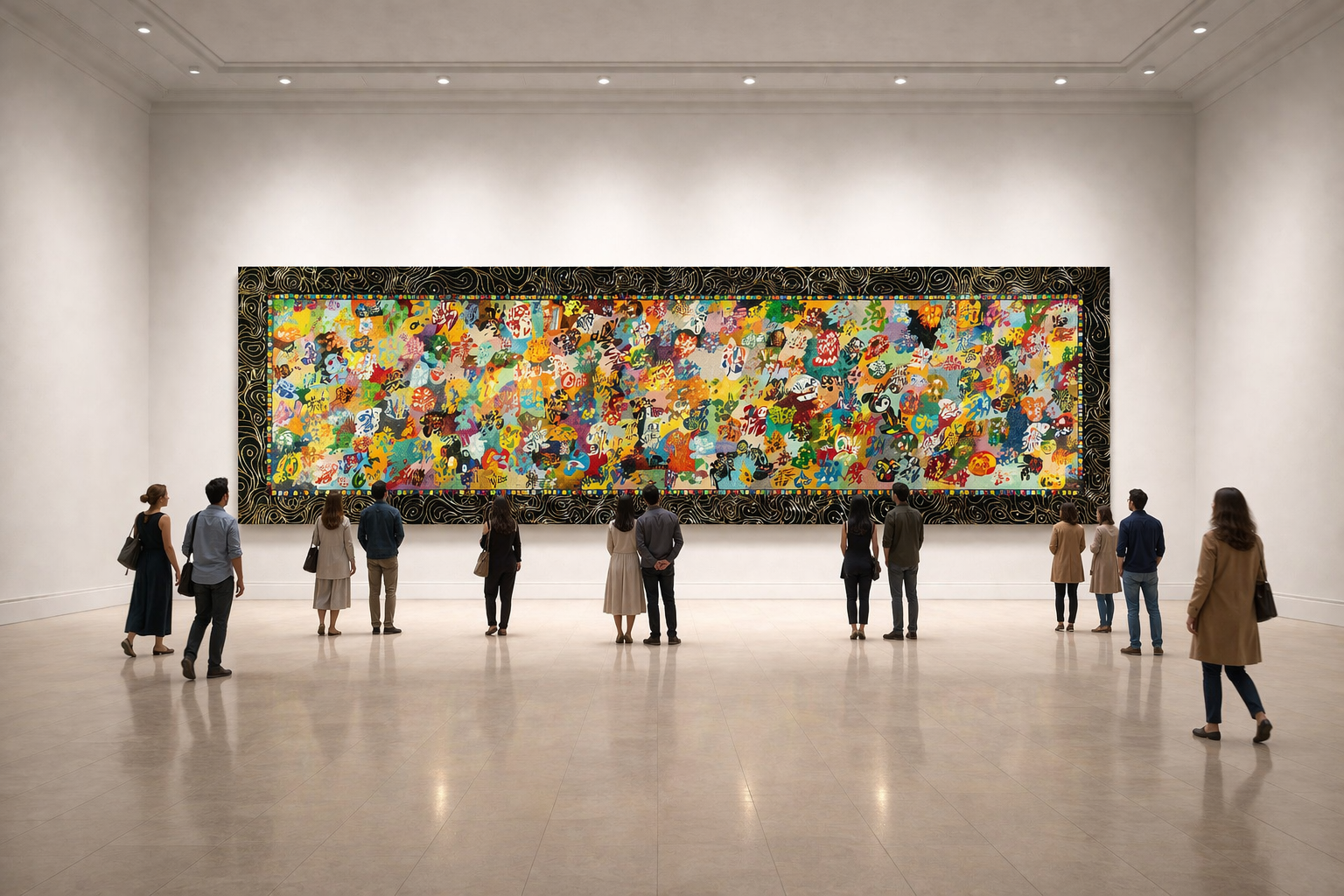
At 3.37 m height and 11.8 m width, the painting establishes a direct relationship with architectural space. It is experienced through movement: the viewer walks alongside the work, encountering shifting visual densities and perceptual states.
From distance, the composition asserts coherence and structure. Up close, it dissolves into tactile painterly events—mirroring the dual nature of DNA itself, simultaneously vast and microscopic.
Artistic Context & Inspirations
Initiated in 2010 and completed in 2016, Divine DNA reflects a sustained period of expansive exploration in the artist’s practice, during which cultural narratives, spiritual inquiry, and contemporary philosophical thought converged.
Developed over six years, the work demonstrates a meticulous engagement with symbolism, composition, and materiality. Its layered forms and nuanced textures articulate an evolving dialogue between tradition and innovation, offering viewers an immersive encounter that anticipates the thematic and conceptual depth of the artist’s later explorations.
Materiality & Technique
Executed in oil on canvas, the surface is built through layered accumulation, compression, and controlled disruption. The painting retains visible traces of process, emphasizing duration and physical engagement with the medium.
Materiality is central to the work’s authority: paint is not illustrative, but structural. The surface functions as a record of time, force, and intention.
Architectural Frame
The 0.5 m wide custom frame is an integral conceptual element. It transforms the painting into a contained object, reinforcing its presence as a constructed entity rather than an image window.
The frame introduces a sense of threshold and reverence—almost reliquary—elevating the work from wall-mounted painting to spatial artifact.
Institutional & Collector Context
Divine DNA aligns with contemporary discussions around monumentality, post-abstraction, and the expanded field of painting. Its scale and conceptual clarity position it for:
- Museum or institutional collections
- Architectural or site-specific installations
- Major private collections focused on statement works
The work is singular in presence and not easily replicated, reinforcing its rarity and long-term value.
Closing Statement
Divine DNA is a work of assertion and permanence. It does not seek immediate interpretation, but sustained engagement. Through scale, material, and structure, it proposes painting as a carrier of encoded meaning—timeless, physical, and resonant.
A work to live with, move alongside, and return to.
Artist Insights
Learn more about the artist’s background, practice, and professional journey.
View Artist ProfileExplore the Work
Navigate through documentation, critical essays, and collection placement for Divine DNA, 2016.
𐰘𐰙𐰖𐰢𐰡𐰘𐰟𐰞𐰜𐰛𐰡𐰘𐰚𐰝𐰡𐰖𐰡𐰖𐰝𐰤𐰙𐰖𐰝𐰘𐰘𐰣𐰤𐰡𐰘𐰣𐰘𐰢𐰝𐰘𐰡𐰥𐰞𐰘𐰣𐰤𐰞𐰢𐰖w𐰘𐰝𐰙𐰢𐰟𐰞𐰛𐰤𐰝𐰖𐰟𐰖𐰣𐰚𐰝𐰠𐰛𐰟𐰖𐰣𐰢𐰖𐰡𐰟𐰤𐰖𐰣𐰚𐰖𐰣𐰛𐰟𐰟