
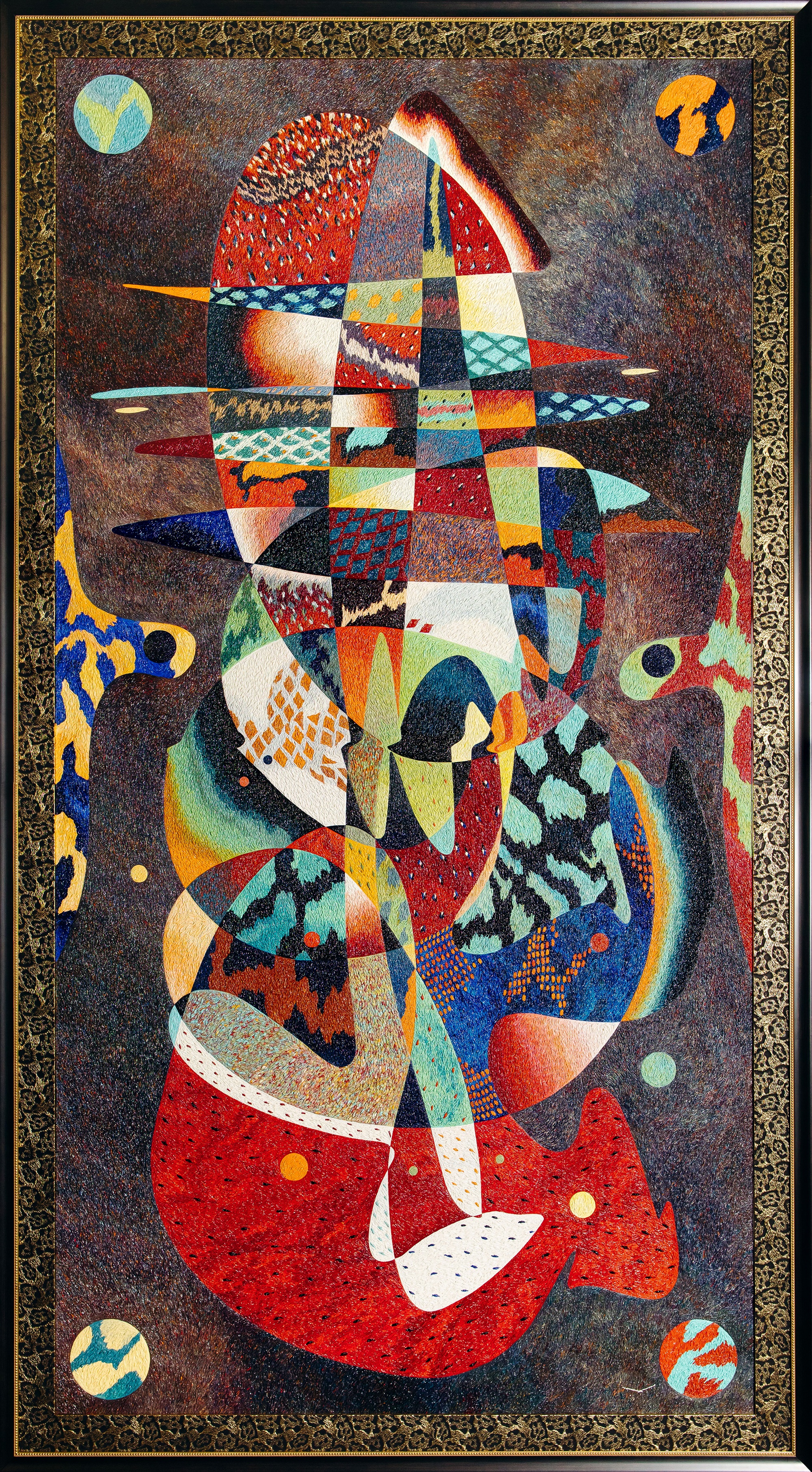
The Protector of the souls , 2015 Oil on canvas
A Monumental System of Spiritual Structure and Inner Equilibrium
Systemic Abstraction and the Logic of Protection
Developed within a framework of systemic abstraction, the work reflects an emerging direction aligned with New Perfectionism—where complexity is not chaotic, but precisely organized into a cohesive visual order. Each element operates within a unified structure, forming a self-regulating system of balance and continuity.
Concept & Meaning
The painting interprets the soul as a layered and structured system composed of interconnected visual states. Rather than depicting protection as an external force, the work defines it as an internal condition of equilibrium. Fragmented forms are precisely aligned along a central vertical axis, creating coherence through integration. The composition suggests that stability emerges through the balanced interaction of complex elements.
Artistic Context & Framework
While informed by historical abstraction, the work advances beyond fragmentation into a resolved, system-driven composition. Within the context of New Perfectionism, visual elements are not expressive in isolation but function as interdependent components within a unified structure. Pattern, color, and geometry are integrated with precision, forming a controlled and coherent visual architecture.
Scale & Spatial Presence
Measuring 3.17 meters in height and 1.91 meters in width, the painting establishes a dominant vertical structure. Its scale reinforces the systemic nature of the composition, allowing the viewer to engage with the work as an immersive visual field where relationships between elements unfold progressively.
Materiality & Execution
Executed in oil on canvas, the work demonstrates controlled layering and refined surface treatment. Repetitive patterns, subtle tonal transitions, and precise segmentation contribute to a sense of order and continuity. The technical approach reinforces the conceptual emphasis on structure, clarity, and resolved complexity.
Structure, Pattern & Visual System
The composition integrates grid-based segmentation with organic curvature, producing a unified system where each section maintains identity while contributing to the whole. This structured complexity reflects a core principle of New Perfectionism: the resolution of multiplicity into a coherent and balanced visual order.
Crate Documentation
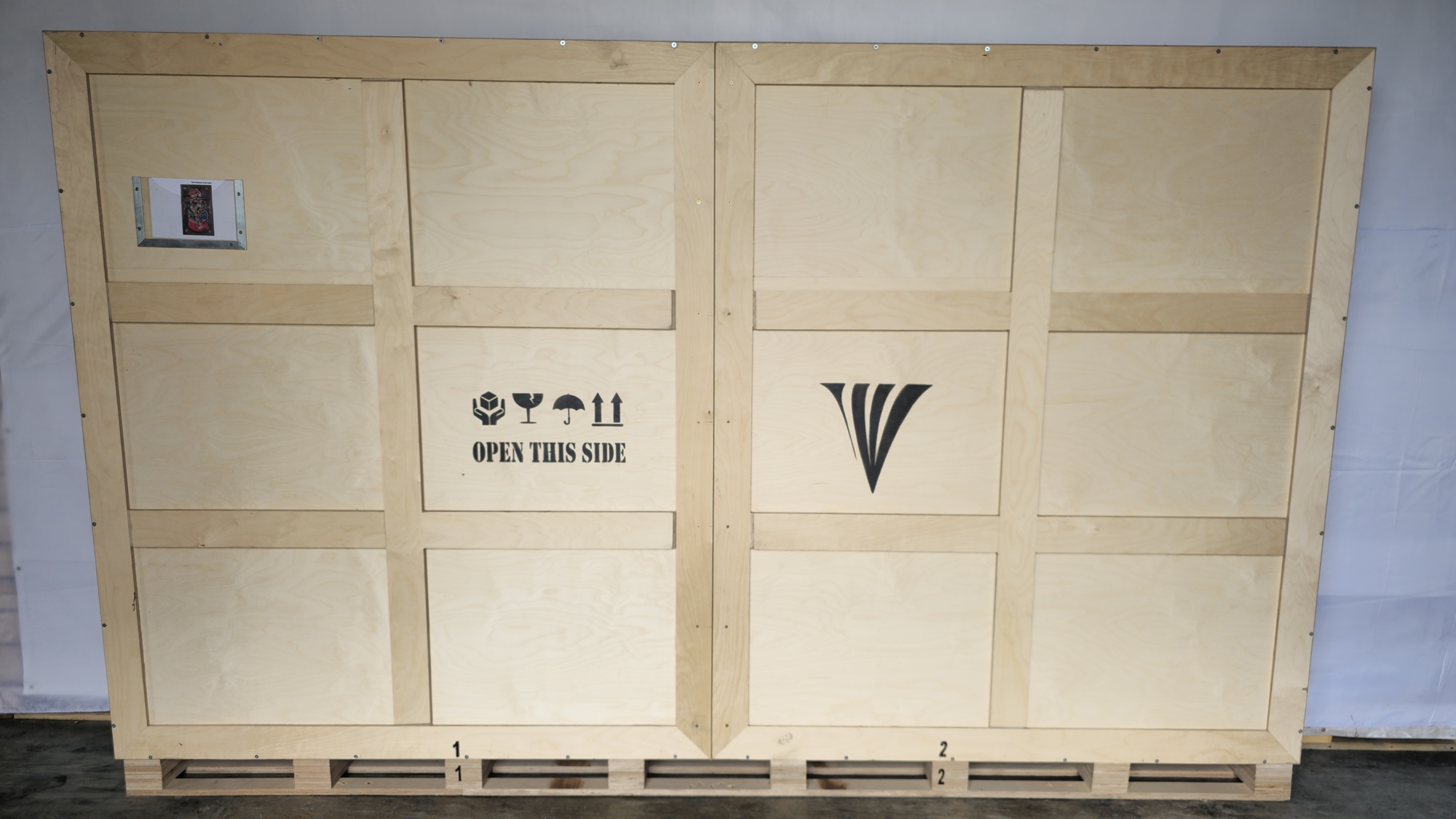
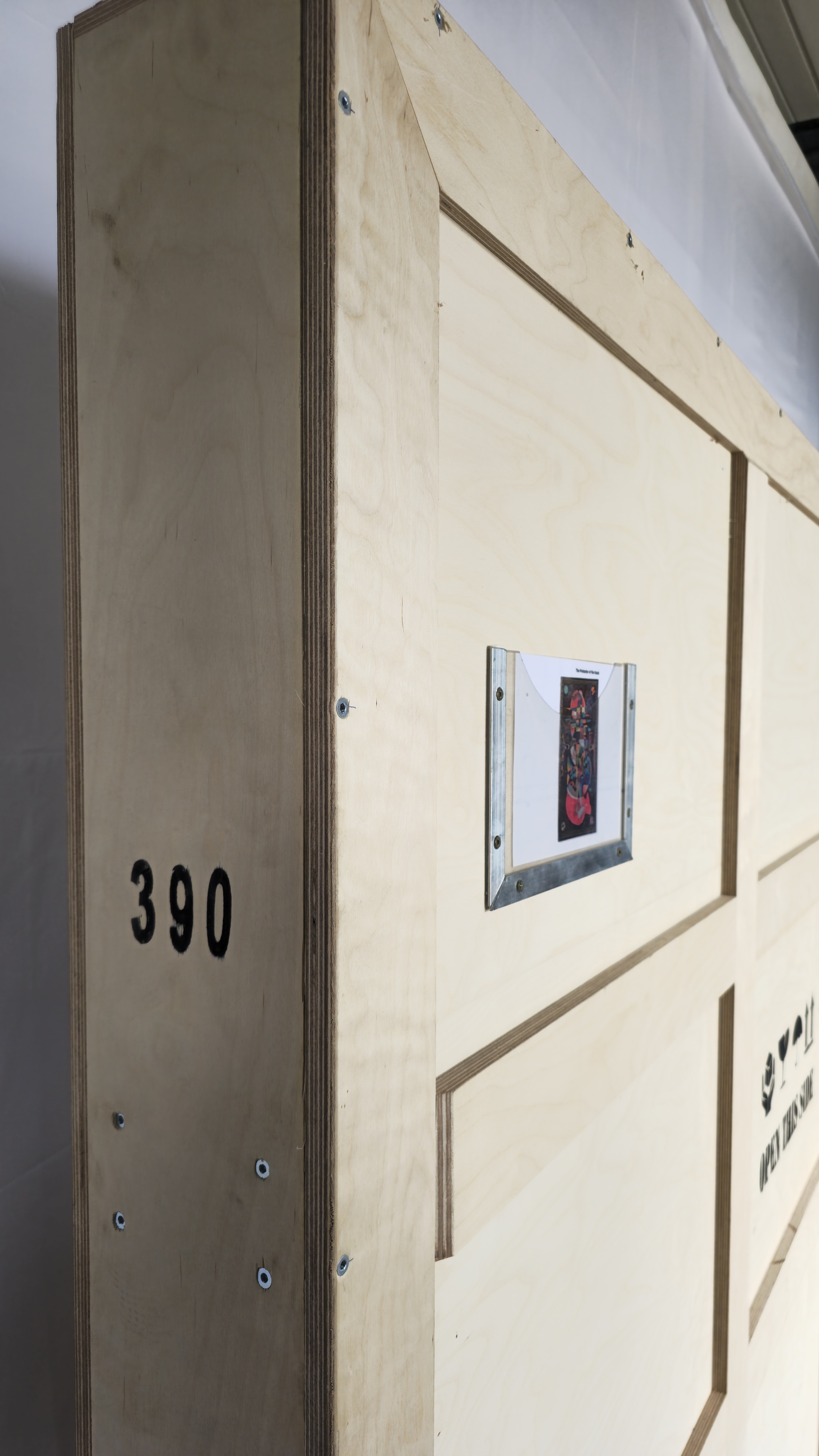
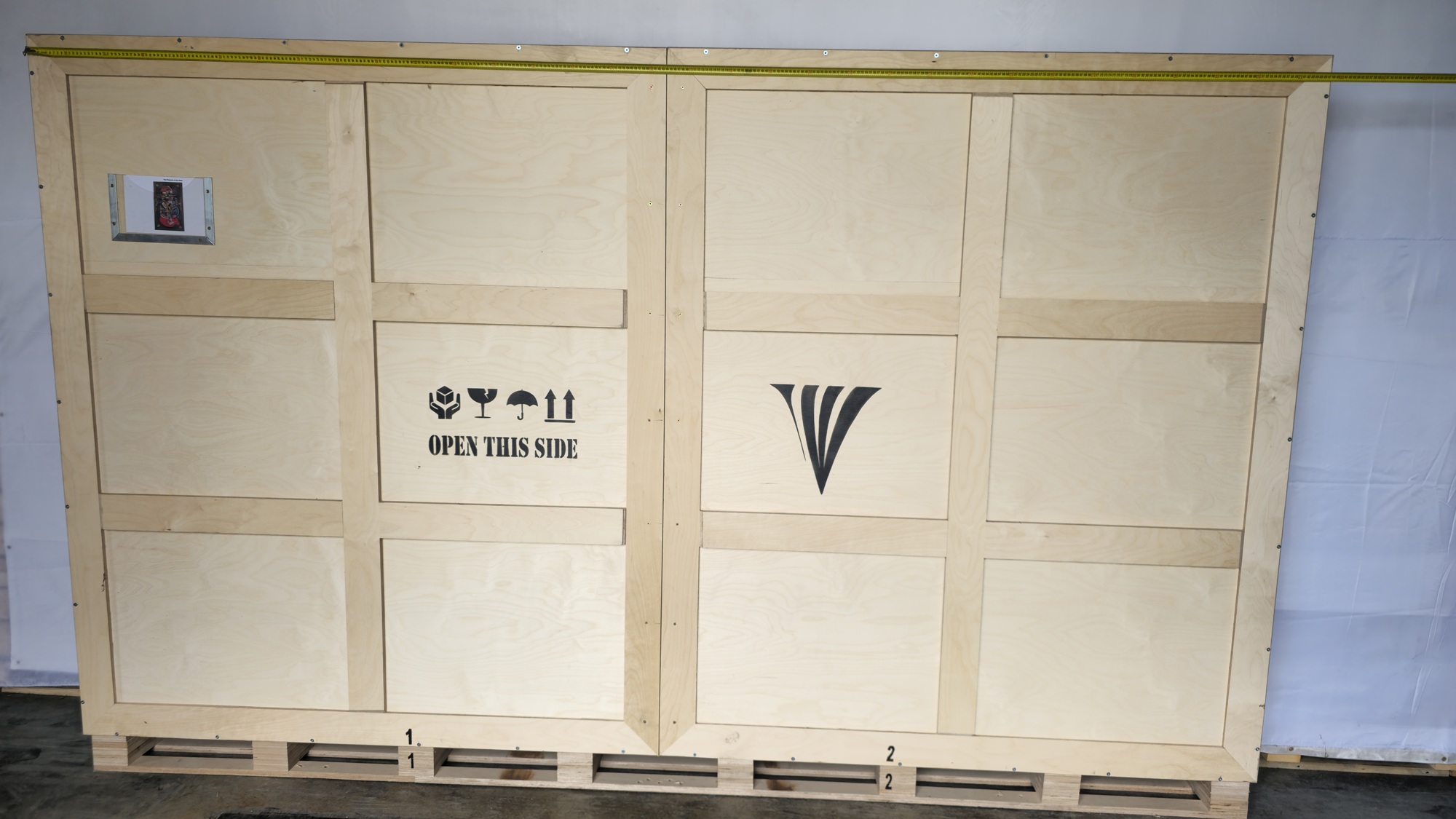
The custom transport crate and its identification markings document The Protector of the souls , 2015, including its logistical handling, storage, and institutional tracking, ensuring safe transit and archival control.
Crate Size Reference
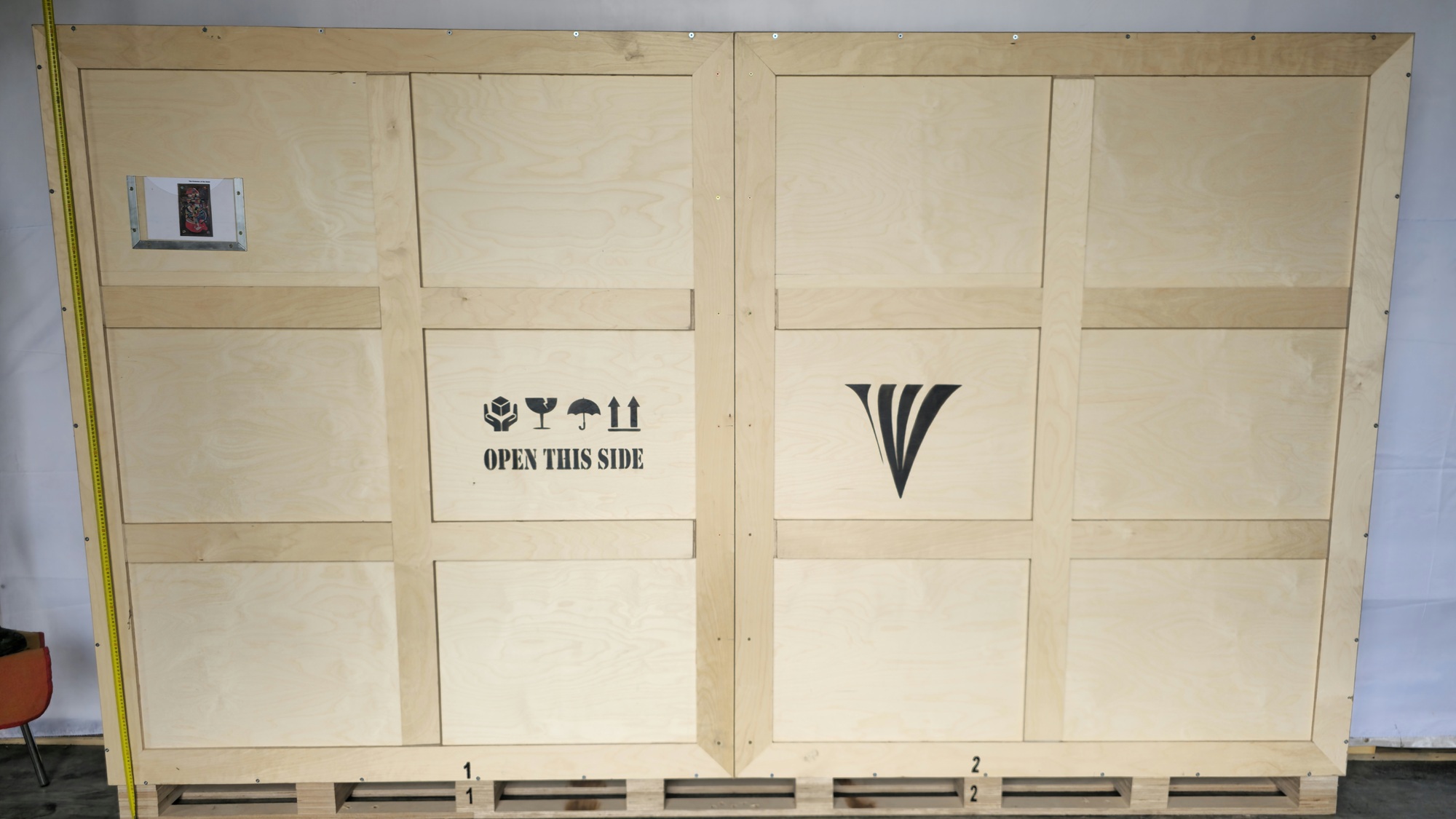
The transport crate for The Protector of the souls , 2015, is shown against a measuring tape to provide an accurate visual reference of its physical dimensions.
Explore the Work
Navigate through documentation, critical essays, and collection placement for The Protector of the souls , 2015.
Collector & Institutional Relevance
The work’s scale, precision, and conceptual clarity position it strongly within contemporary art contexts. Its structured abstraction and unified visual logic make it suitable for museum collections, architectural installations, and significant private holdings seeking intellectual depth and visual authority.
Closing Statement
Through systemic abstraction and controlled complexity, the painting transforms the idea of protection into a state of internal balance. It presents the soul as a structured, evolving system—defined not by fragmentation, but by integration, precision, and coherence.
Artist Insights
Learn more about the artist’s background, practice, and professional journey.
View Artist Profile𐰘𐰙𐰖𐰢𐰡𐰘𐰟𐰞𐰜𐰛𐰡𐰘𐰚𐰝𐰡𐰖𐰡𐰖𐰝𐰤𐰙𐰖𐰝𐰘𐰘𐰣𐰤𐰡𐰘𐰣𐰘𐰢𐰝𐰘𐰡𐰥𐰞𐰘𐰣𐰤𐰞𐰢𐰖w𐰘𐰝𐰙𐰢𐰟𐰞𐰛𐰤𐰝𐰖𐰟𐰖𐰣𐰚𐰝𐰠𐰛𐰟𐰖𐰣𐰢𐰖𐰡𐰟𐰤𐰖𐰣𐰚𐰖𐰣𐰛𐰟𐰟