
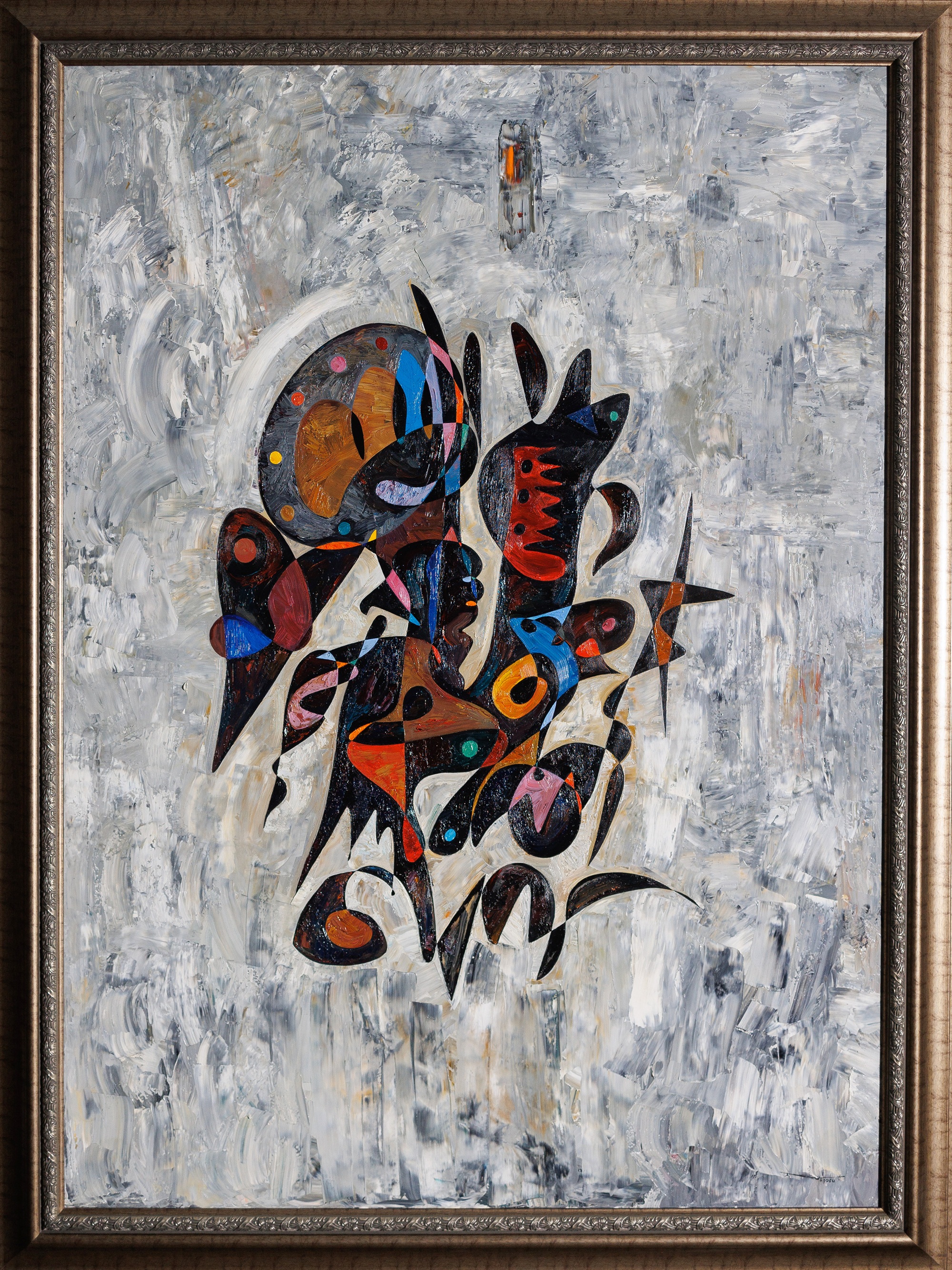
Babylonian Human, 2008 Oil on canvas
A Fragmented Anatomy of History, Sign, and the Post-Human Figure
A Field of Fractured Meaning
Set within a dense, turbulent surface, a central cluster of forms emerges without fixed identity. The painting unfolds as a tension between structure and collapse, where abstraction becomes a way of thinking about the human as something unstable, constructed, and continually in flux.
Concept & Meaning
The work presents the “human” not as a unified figure but as a fragmented configuration of signs. Interlocking shapes suggest bodily references—eyes, limbs, gestures—yet never resolve into a coherent anatomy. Instead, the composition operates as a visual system in which meaning is continuously deferred. The reference to “Babylonian” introduces a historical echo of early writing systems, linguistic breakdown, and cultural complexity, positioning the image within a broader archaeology of signs.
Fragmentation & Visual Language
The central form behaves like a constructed language rather than a depicted body. Sharp edges, curved fragments, and layered colour zones form a syntax without translation. This instability places the work in dialogue with abstraction as a mode of thought, where form does not describe but instead generates meaning through relation, tension, and interruption.
Archaeology of the Surface
The background functions as a dense, weathered field of accumulation and erasure. Built through layered brushwork, it suggests excavation rather than depiction. Within this unstable ground, the central structure appears both discovered and constructed, as if emerging from an archaeological site without origin or fixed chronology.
Materiality & Technique
Executed in oil on canvas, the painting contrasts dense, heavily worked surface passages with sharply defined internal forms. Thick impasto in the background creates resistance and depth, while more controlled applications of paint construct the central configuration. This duality reinforces the tension between instability and structure, erosion and articulation.
Colour, Signal & Disruption
Colour functions as interruption rather than description. Bright accents of red, blue, yellow, and pink punctuate the darker structure, operating as visual signals within a fractured system. These elements disrupt the density of the composition, suggesting moments of intensity, communication, or breakdown within a broader field of uncertainty.
Scale & Spatial Condition
With its large-scale format, the painting produces an immersive field in which the viewer encounters both proximity and distance simultaneously. The central cluster appears isolated yet unstable, hovering within a vast surface that resists closure. This spatial ambiguity reinforces the work’s refusal of fixed interpretive boundaries.
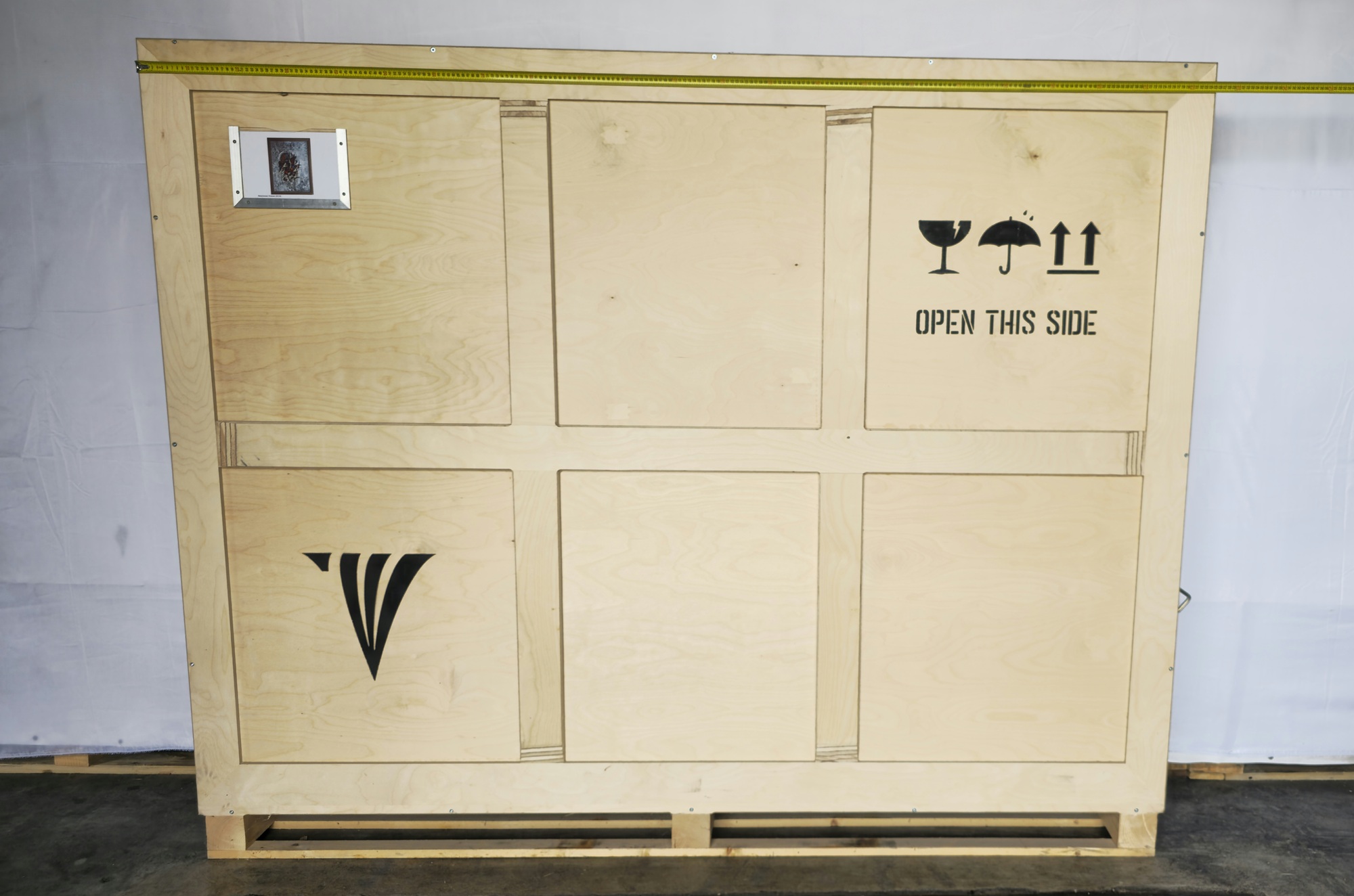
Crate Documentation
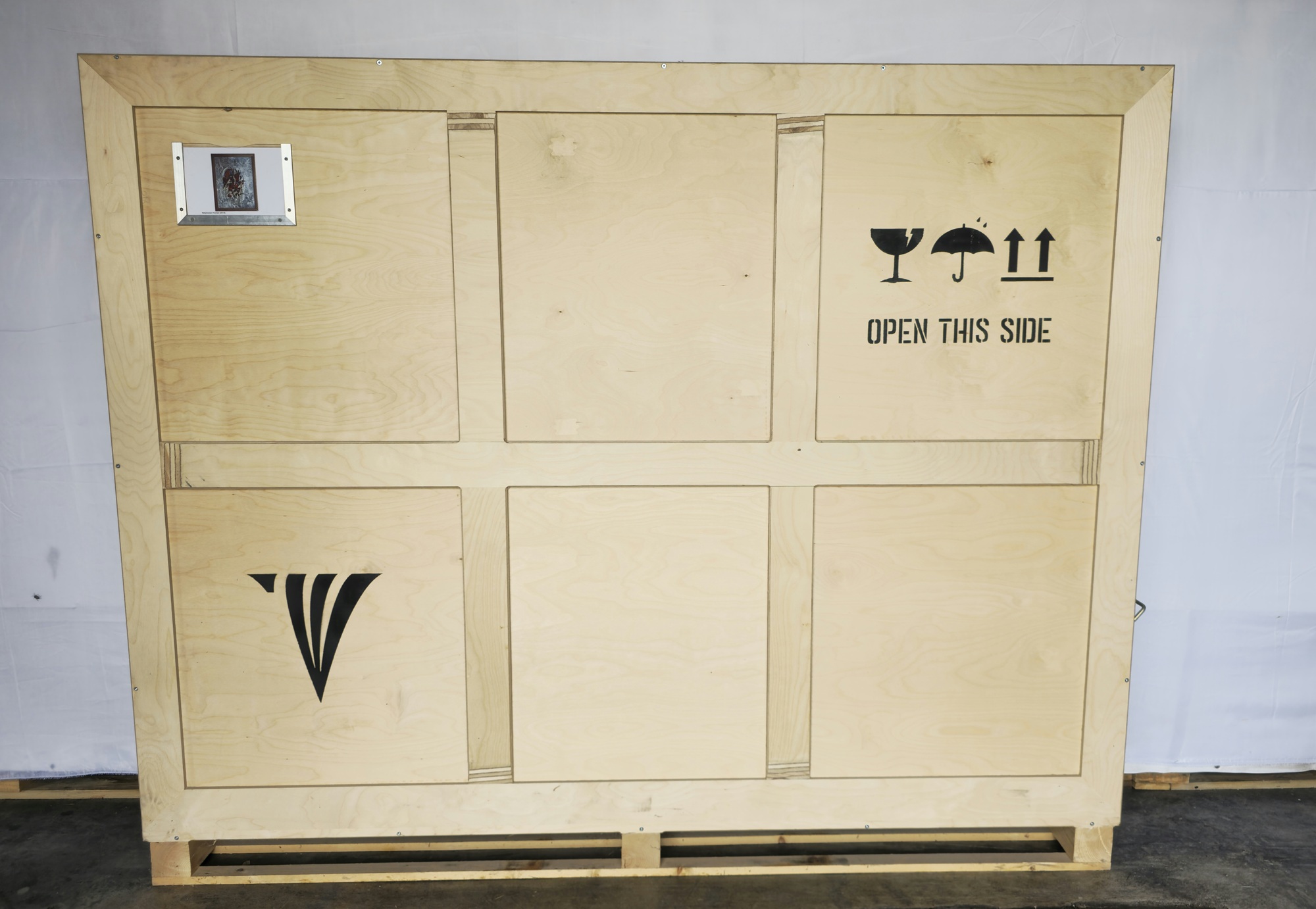
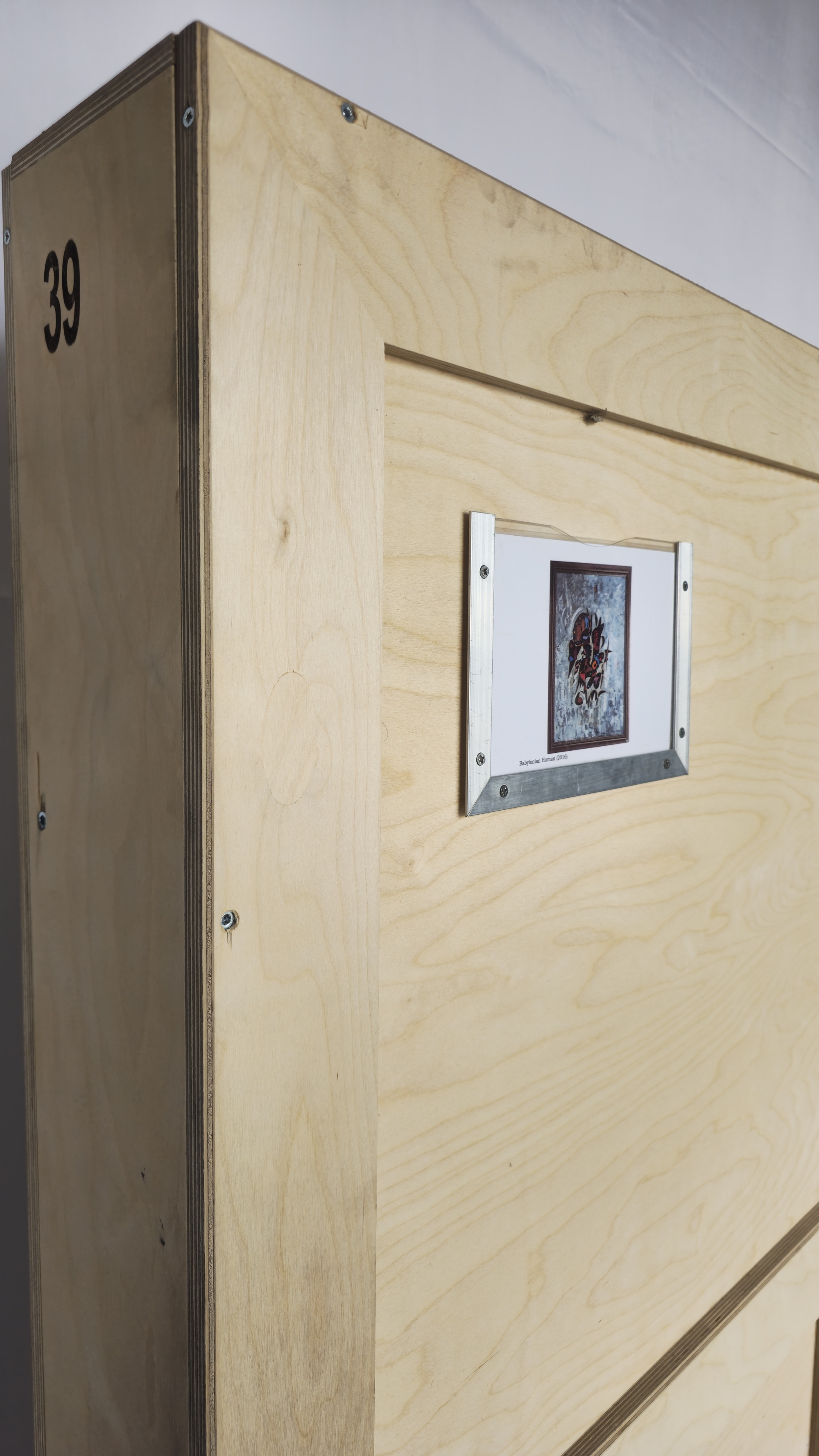
The custom transport crate and its identification markings document Babylonian Human, 2008, including its logistical handling, storage, and institutional tracking, ensuring safe transit and archival control.
Crate Size Reference
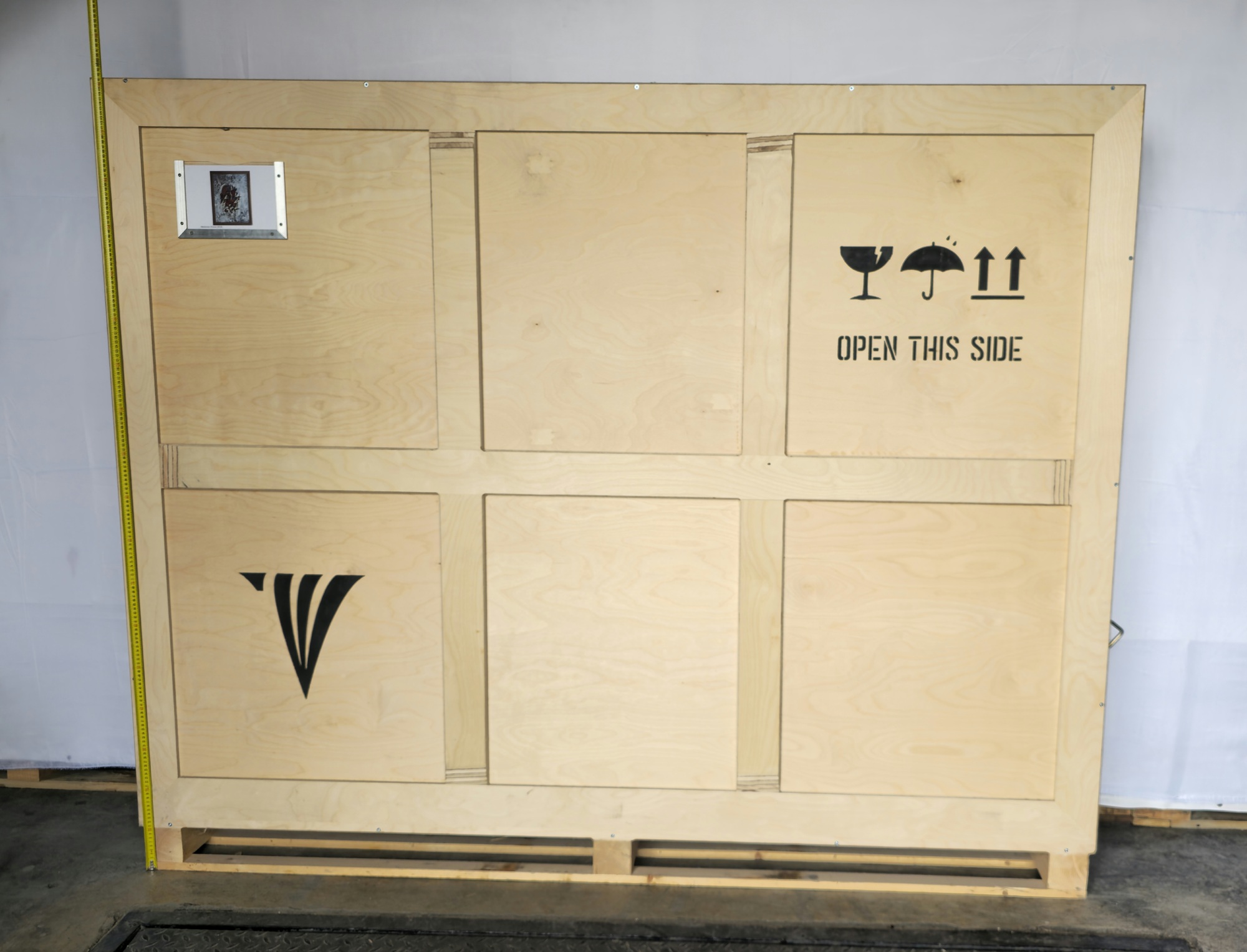
The transport crate for Babylonian Human, 2008, is shown against a measuring tape to provide an accurate visual reference of its physical dimensions.
Explore the Work
Navigate through documentation, critical essays, and collection placement for Babylonian Human, 2008.
Institutional Context
The work’s formal intensity and conceptual ambiguity position it within contemporary collections concerned with abstraction, systems of meaning, and post-representational approaches to the figure.
Closing Statement
Babylonian Human frames the human figure as an unstable construct—formed through fragmentation, historical residue, and shifting systems of signification. The painting resists resolution, instead sustaining a condition of interpretive openness.
Artist Insights
Learn more about the artist’s practice, context, and conceptual framework.
View Artist Profile𐰘𐰙𐰖𐰢𐰡𐰘𐰟𐰞𐰜𐰛𐰡𐰘𐰚𐰝𐰡𐰖𐰡𐰖𐰝𐰤𐰙𐰖𐰝𐰘𐰘𐰣𐰤𐰡𐰘𐰣𐰘𐰢𐰝𐰘𐰡𐰥𐰞𐰘𐰣𐰤𐰞𐰢𐰖w𐰘𐰝𐰙𐰢𐰟𐰞𐰛𐰤𐰝𐰖𐰟𐰖𐰣𐰚𐰝𐰠𐰛𐰟𐰖𐰣𐰢𐰖𐰡𐰟𐰤𐰖𐰣𐰚𐰖𐰣𐰛𐰟𐰟